
Table of Contents
ToggleWhether you’re an Emirati student applying for a national scholarship, an expat graduate trying to get a foreign degree recognised, or a family choosing between private universities, the Ministry of Higher Education and Scientific Research (MoHESR) sits at the centre of every decision. Most people only look it up when something has already gone wrong, an attestation stalls, a university turns out not to be properly accredited, or a scholarship form bounces back for a missing document.
This guide explains what MoHESR actually does, which UAE universities are accredited and automatically recognised in 2026, how the national scholarship system changed in June 2026, and what students in Dubai specifically need to know about accessing ministry services.
What Is the Ministry of Higher Education and Scientific Research?
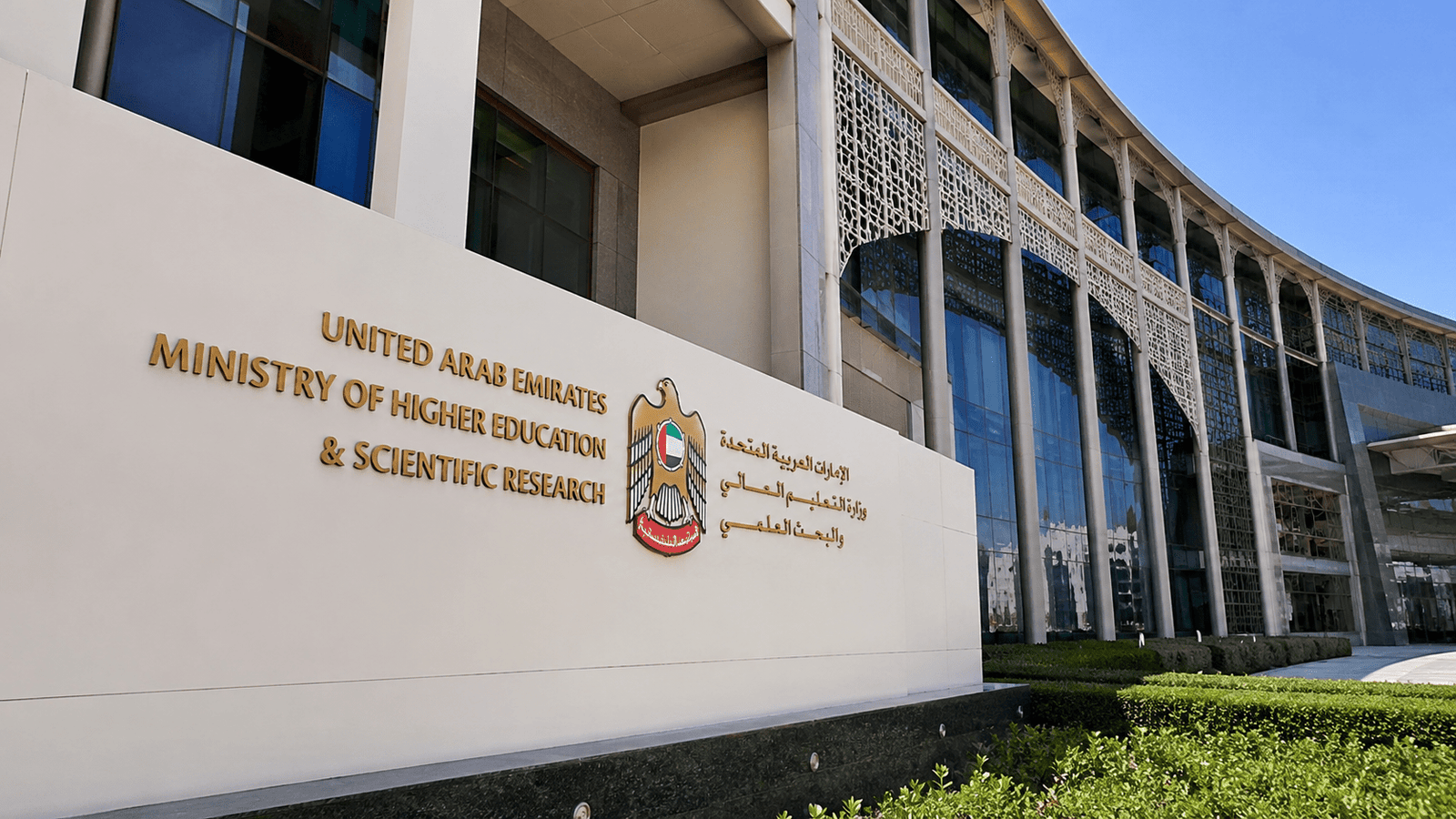
Established in 1976 and headquartered in Abu Dhabi, MoHESR is the UAE’s federal authority for higher education policy, university licensing, national scholarships, and academic quality. It does not run universities itself, it sets the standards that every institution in the country must meet, and it houses three departments that students interact with most.
The Commission for Academic Accreditation (CAA)
The CAA licenses private higher education institutions in the UAE and accredits individual academic programmes. Every private university operating in the country must hold a current CAA licence, and each programme it offers must be separately accredited. A university’s marketing materials saying “accredited” means nothing unless the CAA’s published list confirms it. Before enrolling anywhere, or paying any fees, verify both the institution licence and the specific programme on the CAA portal at mohesr.gov.ae.
The National Admissions and Placement Office (NAPO)
NAPO manages undergraduate admissions to all three federal universities: UAE University (UAEU) in Al Ain, Zayed University (campuses in Abu Dhabi and Dubai), and the Higher Colleges of Technology (HCT), which has seventeen campuses across the seven emirates. NAPO also administers CEPA, the Common Educational Proficiency Assessment, the English and mathematics placement test that determines whether incoming students need foundation-year support before starting their degree.
Certificate Attestation and Equivalency Division
This is the part most people end up dealing with. Attestation confirms that a document is genuine; equivalency converts a foreign qualification into a UAE-recognised credential that employers, further education institutions, and visa authorities can act on. Both services now run primarily through the MoHESR digital portal and mobile app.
UAE Universities: Accreditation and the 2026 Automatic Recognition System
How Accreditation Works
Every private higher education institution in the UAE requires a CAA institutional licence to operate and grant degrees. Licences are time-limited and renewed on a rolling basis, Heriot-Watt University Dubai, for example, held a licence valid through July 2026, with renewal subject to ongoing CAA evaluation. Programmes within a licensed institution still need individual accreditation, so a university can be licensed while certain programmes remain unaccredited (typically newer ones still under review, or those being phased out).
The CAA’s list is the only authorit
The "Elite 34": Automatic Degree Recognition in 2026
In early 2026, MoHESR launched a major reform under the UAE’s Zero Government Bureaucracy programme: Automatic Degree Recognition for graduates of 34 selected UAE-based universities. Instead of manually submitting transcripts and waiting for a case officer review, degrees from these institutions are now digitally linked to the MoHESR system and generate a verified recognition record the moment they are conferred. Graduates from these universities can download a Digital Recognition Report with a unique QR code via UAE Pass through the MoHESR portal, eliminating the traditional equivalency application entirely for domestic use.
When Attestation Is Still Required
Automatic recognition applies within the UAE system; it covers government employment, local further study, and most private sector hiring. It does not replace full attestation in the following situations:
Regulated professions. Healthcare, engineering, law, and licensed government roles typically require fully attested degree certificates as part of the professional licensing or visa process, even if your university is on the Elite 34 list.
Study or employment abroad. Countries like the UK, USA, Canada, and Australia do not recognise UAE automatic degree recognition. International applications still need MOFA attestation and may additionally require a WES (World Education Services) evaluation.
Legal proceedings. Court submissions, immigration cases, and certain contract disputes require certified and attested copies regardless of digital recognition status.
Individual employer requirements. Some employers maintain internal compliance policies requiring attested documents even where automatic recognition would otherwise be sufficient.
The National Scholarship Programme: What Changed in June 2026
The New Cabinet Resolution
On 23 June 2026, the UAE Cabinet approved a comprehensive resolution overhauling the national scholarship system administered by MoHESR. The changes represent the most significant restructuring of the programme in years, and they affect both the financial package and the governance structure for the entire student journey.
What changed financially:
The study readiness and settlement allowance increased to Dh30,000. Healthcare and living benefits expanded alongside it. The full financial package for scholarship recipients now covers monthly stipends, tuition fees, travel tickets, health insurance, graduation allowances, and academic excellence incentives, all structured within the new resolution rather than managed separately.
What changed in terms of governance:
Previously, scholarship governance was fragmented, eligibility, university selection, admissions, and ongoing performance monitoring were handled at different points in the process. Under the new resolution, all of these phases are brought into a single comprehensive framework, from the moment a student is selected to the evaluation of outcomes after graduation.
Sector partnerships:
MoHESR has formalised partnerships with more than ten national entities to ensure scholarship fields align with real labour market demand. Confirmed partners include Dubai Electricity and Water Authority (DEWA) and Emirates Nuclear Energy Corporation (ENEC), among others in the energy, aviation, industry, and human resources sectors. This means students whose chosen field maps onto these priority areas have a stronger case in the application process; the ministry is explicitly trying to fill roles in sectors where national talent pipelines are thin.
Other Scholarship Programmes Worth Knowing
MoHESR is not the only scholarship route for UAE students. Within the country, several federal universities offer highly competitive funded places:
- Khalifa University runs Presidential Scholarships for high-achieving students, covering tuition and stipends in STEM fields.
- Mohamed bin Zayed University of Artificial Intelligence (MBZUAI) offers fully funded postgraduate places with a monthly allowance of AED 15,500 for master’s students and AED 17,500 for PhD candidates.
- The Ministry of Foreign Affairs runs a separate scholarship specifically for Emirati students pursuing fields relevant to the UAE diplomatic corps.
These sit alongside the MoHESR national programme and have their own separate application processes.
Core Services and How to Access Them
Services You'll Actually Use
Degree equivalency. For graduates of foreign universities not on the automatic recognition list, equivalency converts your qualification into a UAE-recognised credential. Apply through the MoHESR e-services portal with your original documents, transcripts, and a completed application form. Do not submit until all supporting documents are attested; submitting with unattested documents doesn’t pause the process, it resets it.
Certificate attestation. MoHESR attests degrees awarded by UAE-licensed institutions, making them usable for government employment, visa applications, and further study. Foreign degree attestation for use within the UAE goes through MOFA. The two processes are separate and serve different purposes.
CAA accreditation check. A free look-up on the MoHESR portal confirms whether a specific institution is licensed and whether a specific programme is accredited. Do this before enrolling anywhere.
Scholarship application. The scholarship eService is the portal entry point for all MoHESR-funded study abroad placements.
Certificate verification. Employers and institutions can verify the authenticity of an attested MoHESR certificate through the ministry’s online verification tool, useful if you’re on the other side of this process checking someone else’s credentials.
Digital Access: Portal and App
Almost everything now runs digitally. The MoHESR portal (mohesr.gov.ae) handles e-service applications. The MoHESR mobile app adds live chat support, real-time application tracking, and an interactive map showing customer happiness centre locations. UAE Pass is integrated throughout. It’s the fastest way to log in and access your records.
Accessing Services From Dubai
There is no Dubai branch of MoHESR. It is a single federal ministry headquartered in Abu Dhabi, and all services are accessed through the same national portal and app regardless of which emirate you’re in. If you need in-person support, the app’s interactive map shows customer happiness centre locations across the country, but for most tasks, starting online is faster than walking in. Visiting in person without having first submitted digitally typically results in a longer wait, not a shortcut.
Common Mistakes That Delay or Derail Applications
Assuming a brochure is the same as a CAA check. Private universities sometimes market programmes as accredited before accreditation is finalised. The CAA list is the only confirmation that matters.
Submitting equivalency documents before attestation is complete. The equivalency process requires documents to be attested first. Submitting prematurely does not hold a queue position; it sends your application back to the start.
Confusing MoHESR with the Ministry of Education (MoE). These are two separate federal bodies. MoE handles schools (K-12). MoHESR handles universities and higher education. Sending a university-related query to MoE, or expecting MoE attestation for a university degree, creates unnecessary delays.
Missing scholarship deadlines after the framework changed. The June 2026 resolution introduced new timelines and restructured the application calendar. Don’t assume last year’s schedule still applies, check the MoHESR portal for current cycle dates.
Using automatic degree recognition for international purposes. The Elite 34 scheme is valid domestically. It does not satisfy international employers, foreign universities, or immigration authorities. If you’re planning to use a UAE degree abroad, traditional MOFA attestation and any country-specific requirements still apply.
Frequently Asked Questions (FAQ's)
It regulates the UAE higher education sector: licensing universities through the CAA, running federal admissions through NAPO, verifying and attesting degrees, and managing national scholarship programmes for Emirati students.
No. MoHESR is one federal ministry. Dubai students use the same national portal, app, and customer happiness centres as students anywhere else in the country.
As of 2026, 34 institutions are included in Phase 1. They span all three federal universities (UAEU, Zayed University, HCT), plus institutions including Khalifa University, American University of Sharjah, University of Wollongong in Dubai, Heriot-Watt University Dubai, and Sorbonne University Abu Dhabi, among others.
The Cabinet approved a new framework in June 2026 that raised the study readiness and settlement allowance to Dh30,000, expanded healthcare and living benefits, introduced end-to-end governance across the full student journey, and formalised partnerships with more than ten national entities in priority economic sectors.
Visit mohesr.gov.ae and use the institution and programme look-up in the CAA section. Both the institution licence and the individual programme accreditation need to be active.
No. It applies only within the UAE. International employers, foreign universities, and immigration authorities require MOFA attestation and may have additional requirements depending on the destination country.
Yes. Failure to maintain the required GPA, changing courses or institutions without approval, or behavioural violations can result in cancellation. Appeals are possible within a defined window.
