
Table of Contents
ToggleFashion in UAE is much more than luxury brands and impressive shopping malls. It is a combination of Emirati heritage, modest dressing, contemporary design, international influences and a fast-changing creative scene.
From the elegant abaya and sheila to the traditional kandura, and from independent Emirati designers to international luxury labels, the UAE has developed a fashion culture where tradition and modern style exist side by side.
In 2026, UAE fashion continues to evolve. Designers are experimenting with silhouettes, fabrics, colours and tailoring while maintaining connections with cultural identity. Recent coverage of UAE designers, for example, highlights modern abayas, pastel jalabiyas and carefully constructed silhouettes that reinterpret traditional garments without abandoning their heritage. Gulf News
Whether you are visiting Dubai, living in Abu Dhabi, shopping in Sharjah or simply interested in Gulf fashion, understanding fashion in UAE gives you a better appreciation of both its cultural roots and modern style.
Also Read: Breaking News · Dubai · Fashion · Hot News · Latest News · Lifestyle · Uae News
What Is Fashion in UAE?
Fashion in the UAE reflects the country's multicultural population while retaining a strong connection to Emirati and Islamic traditions.
The country's official cultural platform describes UAE culture as being influenced by traditional Arab and Islamic values, as well as the country's environment and history. u.ae
Modern UAE fashion therefore includes several different styles:
- Traditional Emirati clothing
- Contemporary modest fashion
- Luxury and designer fashion
- Western-inspired everyday clothing
- Streetwear and casual fashion
- Occasion and evening wear
- Sustainable and emerging fashion
- International fashion trends adapted to the region
This combination makes the UAE particularly interesting for fashion enthusiasts.
Traditional Emirati Fashion
Traditional clothing remains an important part of the country's cultural identity.
Emirati Women's Clothing
The abaya is one of the best-known pieces of Emirati women's clothing. Traditionally, it is a loose, full-length outer garment, often worn with a sheila, or headscarf.
However, the modern abaya has developed into a fashion category of its own.
Contemporary designers experiment with:
- Embroidery
- Structured sleeves
- Different fabrics
- Subtle colours
- Decorative borders
- Minimalist designs
- Layering
- Tailored silhouettes
- Occasion-specific details
The result is a garment that can be traditional while also looking distinctly contemporary.
Visit Dubai notes that the abaya remains popular among Emirati women and modest dressers and can also be made to measure for special occasions. Visit Dubai
Emirati Men's Clothing
The kandura, also known as a dishdasha in some Gulf contexts, is the traditional long garment commonly worn by Emirati men.
It is often paired with:
- Ghutra
- Agal
- Traditional sandals
For formal occasions, some men may also wear a bisht, a traditional cloak.
The UAE government's visitor guidance identifies the kandora, ghutra and agal as elements of traditional Emirati men's dress and the abaya and sheila as traditional women's clothing. u.ae
Modern Abaya Fashion in UAE
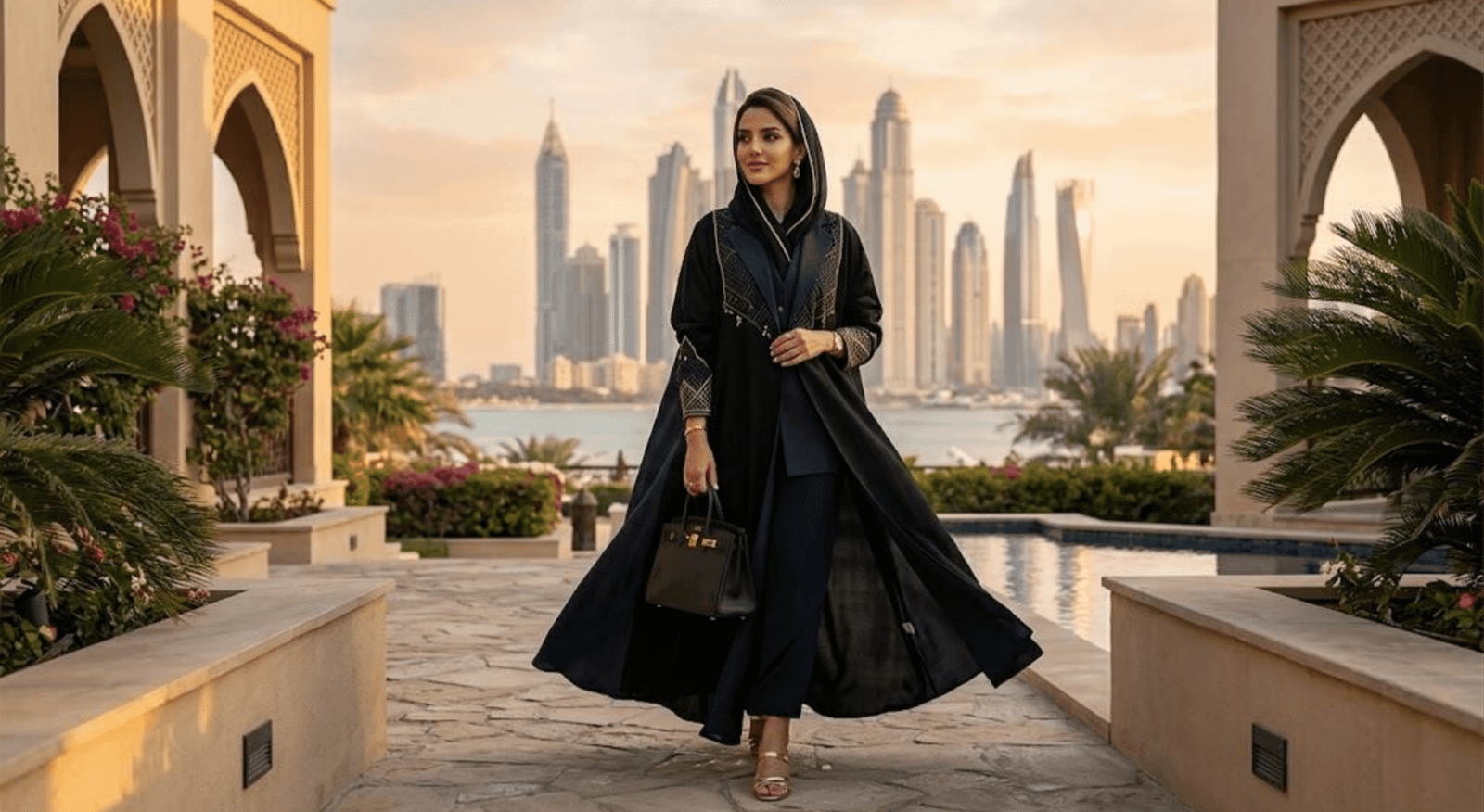
One of the most noticeable developments in fashion in UAE is the transformation of the abaya.
The modern abaya is no longer limited to a simple black outer garment. Designers are using fashion techniques to create pieces for everyday wear, business settings, celebrations and luxury occasions.
Popular Modern Abaya Styles
Some contemporary approaches include:
Minimalist abayas:
Clean lines, simple cuts and limited decoration create an elegant everyday look.
Embroidered abayas:
Detailed embroidery can add personality while maintaining a sophisticated appearance.
Open abayas:
These can be layered over dresses, trousers or coordinated outfits.
Structured abayas:
Tailored shoulders, defined sleeves and architectural shapes give the garment a more modern appearance.
Occasion abayas:
Luxury fabrics, embellishments and carefully designed details make these suitable for weddings, celebrations and formal events.
Recent UAE fashion coverage has also highlighted sculpted black abayas, pastel jalabiyas and modern silhouettes that preserve traditional influences while introducing contemporary construction. Gulf News
UAE Fashion Trends in 2026
Fashion trends change quickly, but several directions are particularly visible in the current UAE fashion conversation.
1. Modern Modest Fashion
Modest fashion is one of the strongest parts of the UAE's fashion identity.
It can include:
- Long dresses
- Maxi skirts
- Wide-leg trousers
- Long coats
- Layered outfits
- Abayas
- Jalabiyas
- Oversized shirts
- Full-length occasion wear
The important point is that modest fashion does not necessarily mean simple fashion. Colour, texture, tailoring and accessories allow people to develop highly individual styles.
Research into Dubai's fashion consumers has also identified demand for both traditional modest garments and modest versions of contemporary Western clothing. The Business of Fashion
2. Quiet Luxury
Minimalist luxury is another influential direction.
Instead of relying on large logos, the look focuses on:
- High-quality fabrics
- Precise tailoring
- Neutral colours
- Simple silhouettes
- Premium accessories
- Subtle detailing
This style works particularly well with the UAE's preference for polished and sophisticated outfits.
3. Colour Beyond Black
Black remains an important colour for abayas, but contemporary collections are increasingly experimenting with different tones.
Depending on the designer and occasion, shoppers may find:
- Beige
- Cream
- Sand
- Brown
- Pastel shades
- Deep green
- Burgundy
- Navy
- Soft pink
The growing use of colour demonstrates how traditional garments can evolve without losing their cultural character.
4. Statement Sleeves and Silhouettes
Sleeves are becoming an important design feature.
Wide sleeves, structured cuffs, flowing shapes and layered construction can transform a relatively simple outfit into a statement look.
5. Traditional Details with Modern Styling
Perhaps the most interesting trend is the combination of old and new.
A traditional-inspired garment can be styled with:
- Contemporary handbags
- Modern footwear
- Minimal jewellery
- Sunglasses
- Structured accessories
- Modern layering
This creates an appearance that feels both regional and international.
Jalabiya and Occasion Fashion
The jalabiya is another important garment in UAE fashion, particularly for gatherings and special occasions.
Modern jalabiyas can feature:
- Soft flowing fabrics
- Embroidery
- Metallic details
- Floral patterns
- Pastel colours
- Wide sleeves
- Decorative trims
Contemporary UAE designers are increasingly using the jalabiya as a canvas for combining cultural references with modern colour palettes and construction. Gulf News
For Ramadan, Eid, weddings and family gatherings, occasion wear can become especially expressive.
Modest Fashion in the UAE
The UAE is one of the most interesting destinations for people exploring modest fashion.
Modesty is also relevant for visitors because public dress should respect local cultural expectations.
The UAE government advises visitors to dress modestly, particularly in public places and conservative areas. Clothing should not be transparent or offensively revealing. At mosques, visitors may need to follow additional dress requirements. u.ae
For everyday sightseeing, practical choices include:
- Loose trousers
- Long skirts
- Maxi dresses
- Lightweight shirts
- Long-sleeved tops
- Lightweight jackets
- Scarves
At the same time, visitors do not generally need to wear traditional Emirati clothing.
Fashion in Dubai
Dubai is arguably the UAE's most internationally visible fashion destination.
The city brings together:
- Luxury fashion
- International brands
- Emirati designers
- Modest fashion
- Street style
- Bespoke tailoring
- Fashion events
- Independent labels
- Shopping festivals
Dubai also has dedicated creative areas such as Dubai Design District, commonly known as d3.
The city's fashion environment makes it possible to move from traditional souks to luxury shopping centres and designer studios within the same trip.
Dubai Design District
Dubai Design District has become an important part of the city's creative ecosystem.
It connects fashion, design, art and creative businesses and provides a platform for regional designers and international creative activity.
For someone researching fashion in UAE, d3 is worth knowing because it represents the country's contemporary design direction rather than only its retail side.
Where to Shop for Fashion in UAE
The UAE offers shopping experiences for almost every budget and style.
| Shopping type | What you can find |
|---|---|
| Luxury malls | International designer brands |
| Traditional souks | Fabrics, traditional garments and accessories |
| Abaya stores | Modern and traditional abayas |
| Designer boutiques | Regional and independent designers |
| Tailors | Made-to-measure clothing |
| Fashion districts | Contemporary and emerging designers |
| High-street stores | Everyday fashion |
| Outlet destinations | Discounted designer and branded fashion |
Dubai's official tourism platform highlights both designer shopping and made-to-measure fashion experiences, including bespoke clothing and abaya services. Visit Dubai
Abaya Shopping
For visitors interested specifically in modest fashion, dedicated abaya destinations can be useful.
Abaya Mall Dubai, for example, is promoted by Visit Dubai as a destination offering designer abayas and modest fashion. Visit Dubai
Fashion in Abu Dhabi
Abu Dhabi has its own fashion character.
The capital combines traditional Emirati culture with luxury shopping, contemporary malls, local boutiques and high-end events.
Fashion shoppers can find:
- Abayas
- Jalabiyas
- Traditional accessories
- Luxury brands
- Contemporary modest wear
- Tailoring services
- Jewellery
- Occasion dresses
For cultural experiences, traditional clothing can also be explored alongside UAE heritage, food and hospitality.
Fashion in Sharjah and Other Emirates
Fashion in the UAE is not limited to Dubai and Abu Dhabi.
Sharjah has a particularly strong connection to culture, heritage and traditional arts. Its markets and heritage districts provide opportunities to discover textiles, traditional clothing and locally influenced designs.
Other emirates also contribute to the country's fashion identity through local boutiques, tailoring, markets and cultural events.
This regional diversity means that UAE fashion cannot be understood only through luxury shopping malls.
Traditional vs Modern UAE Fashion
| Traditional Fashion | Modern Fashion |
|---|---|
| Abaya | Contemporary abaya |
| Kandura | Modern tailored clothing |
| Sheila | Contemporary hijab styling |
| Jalabiya | Designer occasion wear |
| Bisht | Luxury formalwear |
| Traditional embroidery | Minimalist detailing |
| Heritage fabrics | Contemporary textiles |
| Cultural silhouettes | Experimental silhouettes |
The two categories are not necessarily opposites.
In today's UAE, designers frequently take traditional ideas and reinterpret them through modern materials, tailoring and styling.
UAE Fashion Brands and Local Designers
One of the strongest reasons to follow fashion in UAE is the growth of local creative talent.
Emirati and UAE-based designers are contributing to areas such as:
- Modest fashion
- Abayas
- Couture
- Jewellery
- Ready-to-wear
- Accessories
- Bespoke fashion
Vogue Arabia's 2026 coverage of Emirati fashion highlights UAE designers who are combining contemporary modesty, craftsmanship and innovative design. Vogue Arabia
Supporting regional designers also gives shoppers a way to discover fashion that carries a stronger connection to local culture.
What Should Tourists Wear in the UAE?
Tourists can enjoy modern international fashion, but cultural awareness is important.
For everyday public places, consider:
- Lightweight clothing
- Comfortable trousers
- Maxi dresses
- Long skirts
- Breathable shirts
- A light scarf
- Modest beach-to-city layers
In shopping malls and public areas, dressing respectfully is generally the safest approach.
For mosques, religious sites and conservative locations, follow the specific dress requirements.
The UAE government's guidance recommends modest clothing in public and notes that women are not generally required to cover their heads or wear traditional Muslim clothing simply because they are visiting the country. u.ae
Fashion and UAE Climate
The UAE's climate also influences fashion choices.
During hotter months, lightweight and breathable fabrics can make everyday dressing more comfortable.
Popular practical choices include:
- Linen
- Cotton
- Lightweight blends
- Loose silhouettes
- Breathable shirts
- Flowing dresses
- Lightweight abayas
For indoor locations, carrying a light layer can also be useful because shopping malls, hotels and offices can be heavily air-conditioned.
Fashion for Ramadan and Eid
Ramadan and Eid are important periods for fashion retailers and designers.
During these occasions, shoppers often look for elegant clothing suitable for:
- Family gatherings
- Iftar
- Religious occasions
- Evening events
- Eid celebrations
- Hospitality and social visits
Traditional influences can be combined with contemporary silhouettes, allowing outfits to feel festive without becoming overly elaborate.
How to Build a UAE-Inspired Wardrobe
You do not need an entirely traditional wardrobe to embrace UAE fashion.
Start with versatile pieces:
- A neutral long outer layer
- A flowing maxi dress
- Wide-leg trousers
- A lightweight shirt
- A versatile scarf
- Comfortable elegant footwear
- Minimal jewellery
- A structured handbag
Then introduce regional influences through colour, embroidery, accessories or an abaya.
The result can feel inspired by the UAE without looking like a costume.
Why Fashion in UAE Is Becoming More Global
The UAE's fashion scene benefits from its multicultural population and international connections.
Dubai in particular attracts people from many countries, which means local consumers interact with fashion trends from Europe, Asia, the Middle East and beyond.
At the same time, local designers are creating clothing rooted in regional identity.
This creates an interesting fashion environment where:
Global trends + Emirati heritage + modest fashion + luxury design = modern UAE fashion.
That combination is one of the biggest reasons the UAE continues to attract fashion-conscious shoppers and designers.
Final Thoughts
Fashion in UAE tells a story of cultural identity and modern creativity.
The abaya can be traditional or highly contemporary. The kandura remains a powerful symbol of Emirati identity while modern tailoring continues to influence everyday wardrobes. Luxury fashion exists alongside local designers, traditional markets and modest-wear specialists.
What makes UAE fashion especially interesting is not simply the presence of expensive brands. It is the way heritage and modern fashion can exist together.
For visitors, the best approach is to explore the country's fashion culture respectfully. For residents and shoppers, the UAE offers an unusually broad choice, from traditional garments and bespoke abayas to international luxury and contemporary regional design.
As UAE designers continue experimenting with construction, colour, fabrics and silhouettes, the country's fashion identity is likely to become even more distinctive.
Frequently Asked Questions (FAQ's)
Fashion in the UAE combines traditional Emirati clothing, modest fashion, luxury brands, contemporary design and international trends. Abayas, kanduras and jalabiyas remainculturally important while modern designers continue experimenting with new silhouettes and fabrics.
Current trends include modern abayas, modest luxury, tailored silhouettes, contemporary jalabiyas, sophisticated neutral palettes, statement sleeves and traditional designs reinterpreted with modern details. Recent UAE fashion coverage supports the growing focus on contemporary modest design. Gulf News
No. Tourists are generally not required to wear an abaya in everyday public places.However, visitors should dress modestly and follow specific requirements when visiting mosques or other religious sites. u.ae
The traditional Emirati women’s outfit includes an abaya and sheila, with additional forms of traditional dress and decoration depending on the occasion and context. u.ae
Emirati men traditionally wear a kandura or dishdasha, commonly accompanied by a ghutra and agal. A bisht may also be worn for formal occasions. u.ae
Dubai has dedicated abaya stores, traditional markets, malls and designer boutiques. Visit Dubai also lists Abaya Mall as a destination for designer abayas and modest fashion. Visit Dubai
Yes. Modest fashion is an important part of the UAE fashion ecosystem, and current research into Dubai consumers indicates demand for both traditional modest garments and contemporary clothing adapted to modest preferences. The Business of Fashion
