
Table of Contents
ToggleIf you think Abu Dhabi is all about grand mosques, luxury hotels and enormous shopping malls, there is another side of the emirate worth knowing about.
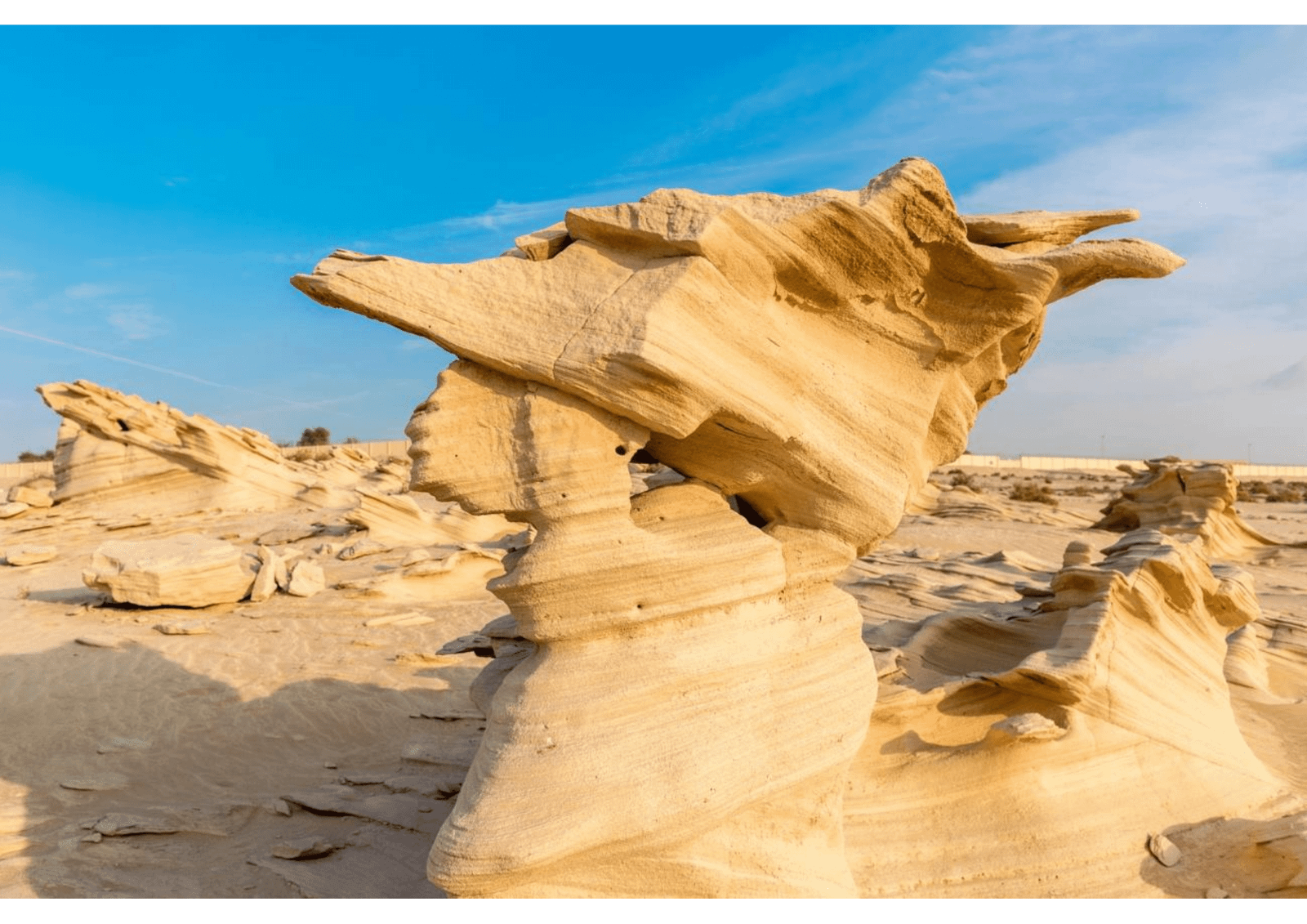
Head east of the city and the landscape begins to feel very different. Instead of skyscrapers and busy roads, you find open desert, wide skies and unusual natural formations that look almost like frozen waves of sand.
One of the most distinctive examples is the Al Wathba Fossil Dunes, a protected natural area known for its sculpted, fossilised sand formations.
The site is home to more than 1,700 fossil dunes spread across approximately seven square kilometres. It has become a notable part of Abu Dhabi’s natural heritage and eco-tourism landscape.
But there is an important update for anyone planning a visit in 2026: the Environment Agency, Abu Dhabi currently lists the reserve as temporarily closed for development until further notice. That means visitors should not assume the walking trails and facilities are open.
This guide explains what makes Al Wathba Fossil Dunes special, how the formations developed, where the site is located, what visitors could experience when it was open, and what to check before planning a future trip.
Al Wathba Fossil Dunes at a Glance
| Visitor information | Details |
|---|---|
| Location | Al Wathba, Abu Dhabi |
| Type | Protected geological area |
| Main attraction | Fossilised sand dune formations |
| Number of formations | More than 1,700 |
| Approximate area | 7 square kilometres |
| Distance from Abu Dhabi city | Around 45 km east of the city |
| Entry fee | Listed as free |
| Current status | Temporarily closed for development, according to EAD |
| Walking trails | Previously featured illuminated trails |
| Best for | Nature lovers, photography enthusiasts, families and geology fans |
The figures and current status above are based on information from the Environment Agency, Abu Dhabi and Experience Abu Dhabi.
Important: Free entry does not mean the site is currently accessible. Check the official closure announcement before travelling.
What Are the Al Wathba Fossil Dunes?
The Al Wathba Fossil Dunes are natural formations created when wind-blown sand became cemented over time by minerals deposited from groundwater.
Instead of remaining loose sand, the material hardened into unusual shapes and layered structures. The result is a landscape of ridges, curves and textured surfaces that can resemble waves or frozen sand.
The Environment Agency, Abu Dhabi identifies the protected area as an important geological feature within the emirate’s natural heritage.
What makes the site particularly interesting is the contrast between the delicate-looking shapes and the geological processes that created them.
The formations are not simply ordinary sand dunes that have been frozen in place. They are sedimentary structures shaped by the interaction of wind, sand supply and mineral-rich groundwater over long periods.
For visitors interested in geology, the site offers a way to observe how desert landscapes can preserve evidence of environmental conditions from the past.
Why Are the Fossil Dunes So Unusual?
Most people associate dunes with loose sand that shifts whenever the wind changes direction.
Fossil dunes are different.
Over time, minerals can bind sand grains together, making the material more resistant to erosion than ordinary loose sand. Wind continues to shape the landscape, but the hardened formations preserve distinctive ridges and patterns.
At Al Wathba, the formations create an almost sculptural appearance. Some have curved surfaces, while others show layered textures and irregular edges.
The area is also notable for the number of formations concentrated within a single protected location. The Environment Agency reports more than 1,700 fossil dunes across seven square kilometres.
That concentration makes the site a distinctive natural attraction in Abu Dhabi.
How Old Are the Al Wathba Fossil Dunes?
The age of the formations is one of the most interesting parts of the site’s geological story.
Official sources describe different age estimates depending on what is being measured.
The Environment Agency’s visitor information says geologists estimate the fossil formations at the protected location to be more than four million years old. Meanwhile, an Abu Dhabi government announcement about the site’s inauguration describes the formations as dating back to around 120,000 years ago.
These figures should not be treated as interchangeable. They reflect different published descriptions of the area’s geological history.
For a general visitor, the key point is that the formations preserve evidence of ancient environmental processes and are considered an important part of Abu Dhabi’s geological heritage.
Where Are Al Wathba Fossil Dunes Located?
The fossil dunes are located in the Al Wathba area, approximately 45 kilometres east of Abu Dhabi city.
The location makes it a potential day-trip destination for people staying in Abu Dhabi, provided the reserve is open to visitors.
It is outside the city’s main tourist districts, so visitors would generally need to plan their transport rather than expect to reach the site by walking from a hotel or major attraction.
Is Al Wathba close to Abu Dhabi city?
The reserve is outside the central city area. The published distance of approximately 45 kilometres gives visitors a rough idea of its location, but actual driving time depends on the starting point, traffic and route.
Because the reserve is currently listed as temporarily closed, it is best to check its official status before arranging transport.
Can you visit from Dubai?
A trip from Dubai would require additional travel planning because the site is in Abu Dhabi.
If you are staying in Dubai, compare the driving distance and total travel time with other natural attractions closer to your accommodation. A visit to Al Wathba may be more convenient as part of a longer Abu Dhabi itinerary.
Is Al Wathba Fossil Dunes Open in 2026?
Current visitor status: Temporarily closed
The Environment Agency, Abu Dhabi currently states that Al Wathba Fossil Dunes Reserve is temporarily closed for development until further notice.
No reopening date is confirmed in the official information cited here. Check the EAD website before making travel plans.
This is the most important practical detail in this guide.
The reserve previously welcomed visitors to its trails and visitor facilities. However, earlier opening hours and visitor information should not be treated as current while the closure remains in effect.
If you see an old article mentioning evening walks, food trucks or light shows, remember that those descriptions may refer to an earlier operating period.
Why is the reserve closed?
The official visitor information says the reserve is temporarily closed for development. It does not provide a confirmed reopening date in the information currently available.
Until a new announcement is published, visitors should avoid assuming that the site is open or that all previously available facilities remain accessible.
What Could Visitors See at Al Wathba Fossil Dunes?
When the reserve was open, its main attraction was the unusual fossilised landscape.
The visitor experience was designed to help people explore the formations while limiting unnecessary disturbance to the protected area.
The site previously offered several features that made it more than a simple roadside photo stop.
1. The fossilised formations
The main reason to visit was, of course, the formations themselves.
Their irregular shapes, ridges and layered surfaces make them visually different from the loose dunes commonly associated with the UAE desert.
For photographers, the textures and shadows can create interesting compositions, especially when sunlight falls across the formations at an angle.
The formations are also a useful visual introduction to the geological processes that shape desert landscapes.
2. Walking trails
The Environment Agency describes illuminated walking trails extending for approximately three kilometres, with seating and shaded areas along the route.
These trails were designed to allow visitors to experience the landscape while following a managed route.
Because the reserve is currently closed, visitors should not assume these trails are available for use in 2026.
3. Visitor centre
The site previously included a visitor centre with a viewing area and a gallery corner.
These facilities were intended to help visitors understand the area’s natural features and enjoy the surroundings without needing to explore the formations directly.
4. Seating and shaded areas
Official descriptions also mention benches and shaded places for visitors to rest.
These features were especially relevant in a desert environment, where temperatures and direct sunlight can affect how comfortable a walk feels.
Their current availability should be confirmed before a future visit.
5. Amphitheatre and light displays
The reserve was also promoted as a place where visitors could enjoy music and light shows from an amphitheatre with a capacity of around 200 people.
Food and beverage trucks were also planned for designated areas. These are descriptions of the site’s visitor facilities, not a guarantee that performances or food services are operating in 2026.
Is Al Wathba Fossil Dunes Good for Families?
The site was designed to introduce visitors to Abu Dhabi’s geological and environmental heritage, making it a potential educational outing for families.
Children can learn how wind, sand and minerals contribute to the formation of unusual landscapes.
For adults, the experience combines nature, photography and an opportunity to explore a different side of Abu Dhabi.
However, the current closure means families should not plan a visit until the Environment Agency confirms that the reserve has reopened.
What should families consider before visiting in the future?
Once access is restored, families should check:
- Whether the walking trails are open and suitable for their group.
- Whether visitor facilities and shaded seating are available.
- Whether children can comfortably complete the intended walking route.
- Whether there are any restrictions on photography or access.
- Whether food, drinking water and toilets are available on the day.
The safest approach is to check the official visitor information rather than assume that facilities described in older articles are still operating.
Best Time to Visit Al Wathba Fossil Dunes
The best time for an outdoor desert walk generally depends on temperature, sunlight and personal comfort.
However, there is no confirmed current visiting schedule for Al Wathba Fossil Dunes while the reserve is closed.
When it reopens, visitors should use the official opening hours and weather conditions to decide when to go.
Cooler months
The cooler months in the UAE are generally more comfortable for outdoor sightseeing than the peak summer period.
For a future visit, the morning or late afternoon may offer softer light for photography, depending on the site’s operating hours and weather conditions.
Summer visits
Outdoor activities in Abu Dhabi can become uncomfortable during periods of high heat.
If the reserve reopens during the warmer months, visitors should check local weather conditions, bring water and follow any official guidance.
Do not rely on old opening hours or assume that the reserve is accessible simply because the weather seems suitable.
How to Get to Al Wathba Fossil Dunes
Al Wathba Fossil Dunes is located in the Al Wathba area, east of Abu Dhabi city.
The published distance is approximately 45 kilometres from central Abu Dhabi.
By car
Driving is likely to be the most practical option for reaching the area once the reserve reopens.
Before travelling, use a current navigation app to confirm the route and check whether the entrance is accessible.
Do not drive to the reserve while it remains closed, and do not assume that an old map pin confirms public access.
By taxi
Visitors considering a taxi should confirm that the driver can reach the correct destination and that the site is open before booking.
For a future visit, it is also worth planning the return journey in advance, particularly if travelling from outside central Abu Dhabi.
By public transport
The official information referenced in this guide does not establish a current direct public transport service to the reserve.
If public transport is important to your trip, check the latest Abu Dhabi transport information before planning a route.
What Should You Bring for a Future Visit?
Once the reserve reopens, a little preparation can make an outdoor visit more comfortable.
Water and sun protection
Bring drinking water, sunscreen, a hat and sunglasses when outdoor conditions require them.
Even a short walk can feel more demanding in direct sunlight, particularly during warmer periods.
Comfortable footwear
If walking trails are available, comfortable shoes can make it easier to explore the area.
Choose footwear suitable for outdoor paths rather than assuming that the entire route will be smooth or paved.
Camera or smartphone
The fossil formations have unusual textures and shapes that can be interesting to photograph.
Try capturing wide landscape views as well as close-up details, while remaining on permitted paths and respecting any photography restrictions.
A plan for refreshments
Do not assume food trucks or other food services are available.
The site’s previous visitor information mentioned designated food and beverage areas, but current services need to be confirmed after reopening.
Photography Tips for Al Wathba Fossil Dunes
The formations are particularly interesting because of their unusual surfaces and natural patterns.
For a future visit, the following photography ideas may help:
Look for texture
Close-up photographs can show the ridges, grooves and layers that distinguish fossilised formations from loose sand.
Use natural light
Low-angle sunlight can create shadows that bring out the shape of the formations.
The best light will depend on the weather, time of day and any restrictions on when visitors can enter.
Include the wider landscape
A wider frame can show how the formations sit within the surrounding desert environment.
This can help communicate the scale of the protected area rather than focusing only on one rock-like structure.
Respect the protected site
Do not climb on, chip, scratch or remove pieces of the formations for photographs.
The fossil dunes are part of a protected natural area, and visitors should follow all posted instructions and remain within permitted visitor areas.
How Al Wathba Fossil Dunes Help Preserve Abu Dhabi's Natural Heritage
Abu Dhabi is often associated with modern architecture and urban development, but the emirate also contains landscapes that preserve evidence of earlier environmental conditions.
Protected geological areas such as Al Wathba Fossil Dunes help maintain that natural heritage.
The site is recognised for its unusual geological features and its role in promoting awareness of the emirate’s environment. The Abu Dhabi government has described the reserve as a protected geological area and a destination for eco-tourism.
Protecting formations like these is important because their value comes from their natural structure and geological history.
Once a formation is damaged or removed, it cannot simply be replaced with a new one.
How visitors can help
When access is permitted, visitors can help protect the area by:
- Staying on designated paths.
- Avoiding climbing on fragile formations.
- Taking rubbish away or using designated waste facilities.
- Following signs and instructions from site staff.
- Respecting any restrictions on photography or activities.
- Avoiding removal of sand, rocks or other natural material.
Responsible behaviour helps protect the landscape for future visitors and supports the purpose of a protected natural area.
Nearby Places to Consider in an Abu Dhabi Nature Itinerary
If you are planning a nature-focused trip to Abu Dhabi, there are other locations worth researching.
Check the operating status of each place before travelling, as access conditions can change.
Al Wathba Wetland Reserve
The Al Wathba Wetland Reserve is known for its birdlife, including greater flamingos.
The Environment Agency describes the reserve as a wetland habitat with more than 250 bird species and a range of other wildlife. It is also currently listed as temporarily closed for development, so check its official status before planning a visit.
Jebel Hafit National Park
The Jebel Hafit National Park offers a very different landscape, with rocky mountain terrain and views across the surrounding area.
The Environment Agency identifies Jebel Hafit as Abu Dhabi’s highest peak and one of the emirate’s notable natural destinations.
Mangrove National Park
The Mangrove National Park offers a coastal nature experience with mangrove habitats and waterways.
It is a different kind of outdoor attraction from the fossil dunes, making it an option for visitors interested in the emirate’s natural landscapes. Check current access arrangements before visiting.
Is Al Wathba Fossil Dunes Worth Visiting in 2026?
The answer depends on whether you are planning a future trip or looking for somewhere to visit right now.
For people interested in geology, desert landscapes and nature photography, the fossil dunes are a distinctive part of Abu Dhabi’s natural heritage.
The site’s unusual formations, protected status and visitor facilities made it a notable eco-tourism destination.
However, the current closure is the deciding practical factor. The Environment Agency, Abu Dhabi lists the reserve as temporarily closed for development until further notice.
If you are planning a trip in 2026, do not make the fossil dunes your main destination unless the official visitor information confirms that access has resumed.
For now, you can learn about the site’s geological history and consider other nature destinations in Abu Dhabi that are confirmed to be open.
Final Thoughts
Al Wathba Fossil Dunes offers a different perspective on Abu Dhabi. Its unusual formations preserve a record of natural processes that shaped the desert landscape long before the city’s modern skyline appeared.
With more than 1,700 fossil dunes across approximately seven square kilometres, the protected area is a distinctive part of the emirate’s geological heritage.
But for anyone planning a visit in 2026, the most important thing is to check the official status first. The reserve is currently listed as temporarily closed for development, and no confirmed reopening date is provided in the cited visitor information.
Once access resumes, it may again offer an opportunity to explore one of Abu Dhabi’s most unusual natural landscapes. Until then, understanding its geological story is a useful way to discover a side of the UAE that many travellers overlook.
Frequently Asked Questions (FAQ's)
The fossil dunes are in the Al Wathba area of Abu Dhabi, approximately 45 kilometres east of the city centre.
The Environment Agency, Abu Dhabi currently lists the reserve as temporarily closed for development until further notice. Check its official website for reopening announcements.
The protected area contains more than 1,700 fossil dunes spread across approximately seven square kilometres.
IACAD manages over 680 mosques across the emirate, all following the same centrally published prayer schedule.
Official sources provide different age descriptions. The Environment Agency’s visitor information says the formations are estimated to be more than four million years old, while an Abu Dhabi government announcement refers to formations dating back around 120,000 years.
The Environment Agency lists entry as free. However, the reserve is currently listed as temporarily closed, so free entry should not be interpreted as permission to visit.
A visit would depend on the trails and facilities available after reopening. The current official information does not provide a confirmed recommended visit duration for the closure period.
Photography may be possible when the reserve reopens, subject to any official restrictions. Visitors should avoid climbing on or damaging the formations.
