
Table of Contents
ToggleMost tourists in Dubai eat well. Very few eat authentically.
The city has no shortage of restaurants, rooftop dining, and hotel branches. But Emirati cuisine — the food that actually comes from this land — tends to get buried under everything else. It is not always in the obvious places. You find it in the older neighbourhoods, at the markets near Dubai Creek, in small stalls run by families who have been making the same recipes for generations.
If you are visiting Dubai in 2026, or you live here and have never explored the local markets in Dubai for food, this guide is written for you. These are the dishes worth going out of your way for, the markets worth visiting, and the things nobody tells you before you go.
Why Emirati Street Food Is Becoming a Major Attraction in 2026
Dubai tourism has shifted. Visitors are spending less time ticking off the big-ticket attractions and more time looking for experiences that feel real. Food is a big part of that.
The UAE government has been investing in cultural tourism under its national identity programmes, and Dubai food culture has become a focal point. Heritage food festivals, market revival projects in Deira, and neighbourhood dining initiatives have all made traditional Emirati food easier to find than it was even five years ago.
The result is that the Dubai culinary experience now includes a genuine food trail — one that connects the city’s Bedouin roots, its coastal fishing history, and its spice trade heritage through what people actually eat.
Understanding Emirati Cuisine
Origins and Cultural Roots
Emirati cuisine developed across two very different environments — the desert interior and the Arabian Gulf coastline. Inland communities relied on dates, camel milk, and grains. Coastal settlements ate fresh fish, dried seafood, and shellfish. Both influenced UAE traditional food in ways that are still visible in markets today.
The spice trade that ran through the Arabian Peninsula for centuries also left a permanent mark. Saffron, cardamom, turmeric, dried lime, and rose water turn up repeatedly across Emirati dishes, even simple ones.
The Tradition of Hospitality
Bedouin traditions shaped how food was prepared and shared. The meals were communal. Hospitality was not optional — it was a cultural obligation. Arabic coffee (gahwa) and dates are still served to guests as a reflex, not a gesture. That context matters when you are eating authentic Emirati cuisine at a market stall. You are not just buying a snack. You are stepping into a social tradition.
Top Emirati Street Foods You Must Try
Luqaimat
Luqaimat are small fried dough balls, crispy outside and soft inside, drizzled with date syrup and dusted with sesame seeds. They are one of the most recognised Emirati snacks, sold at markets, food festivals, and family gatherings year-round. The batter is simple — flour, yeast, water — but the date syrup (dibs) is what makes them. Sweet, slightly tangy, and deeply caramel-like. Eat them fresh. They do not survive sitting.
Find them at: Al Fahidi Historical District stalls, Waterfront Market, Ramadan night markets.
Chebab
Chebab are Emirati pancakes made with fenugreek, saffron, and sometimes cardamom. Thinner than Western pancakes, with an earthy, slightly bitter edge from the fenugreek and a golden colour from the saffron. They are typically served at breakfast with date syrup or fresh cream. Not widely known outside the UAE, which makes finding them at a market stall feel like an actual discovery.
Find them at: Old Dubai souks, traditional breakfast spots in Deira.
Balaleet
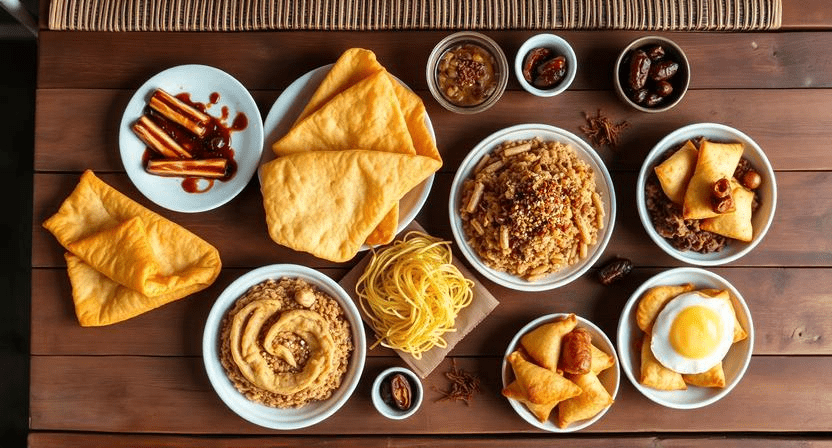
Balaleet is a sweet vermicelli dish served with an egg omelette on top. The combination sounds odd if you have never had it. It works. The noodles are cooked with rose water, cardamom, and saffron, then topped with a thin savoury omelette — sweet and salty in the same bite. It is a breakfast dish, primarily, eaten during Eid and family occasions. Finding it at a market in 2026 is more likely during festivals than on a regular weekday.
Regag Bread
Regag is a paper-thin flatbread cooked on a large iron plate over open flame. Watching it being made is almost as good as eating it. The dough goes on the hot plate, spreads across it, and crisps in under a minute. It is served with eggs, cheese, honey, or ground meat. The texture is like a very thin crepe, but crispier and with a slight char. Must-try food in Dubai for anyone who has not had it.
Find it at: Deira food markets, Al Seef heritage area.
Khameer Bread
Khameer is a yeasted, slightly sweet bread made with saffron and cardamom, baked in a clay oven. Softer and more pillowy than regag. It is eaten with cheese or eggs at breakfast, or with honey as a snack. The smell when it comes out of the oven is worth the trip on its own.
Harees
Harees is slow-cooked wheat and meat, blended into a smooth, porridge-like dish. It sounds unremarkable. It is not. When done properly, with clarified butter poured on top and a sprinkle of cinnamon, it is deeply satisfying in a way that is hard to explain to someone who has not had it. Harees is a Ramadan staple, but you will find it at heritage food events and cultural markets throughout the year.
Machboos
Machboos is the closest Emirati cuisine has to a national rice dish. Spiced rice cooked with meat (lamb or chicken) and dried limes (loomi), which give it a sour, smoky undercurrent that cuts through the richness of the meat. It is rarely a street food in the grab-and-go sense, but at market food stalls and outdoor festivals, it gets served in portions. Worth seeking out as a full meal within a Dubai food culture tour.
Samboosa
Samboosa are fried pastry parcels filled with spiced meat, onions, or cheese. If you have had samosas, the concept is familiar — but the Emirati spicing is different, usually heavier on cardamom and lighter on heat. They are common during Ramadan but sold at food markets in Dubai all year. Easy to eat standing up, cheap, and genuinely good.
Emirati Date Desserts
Dates are not a side note in Emirati cuisine. They are central to it. The UAE produces dozens of varieties — Medjool, Kholas, Lulu — each with a different sweetness level, texture, and use.
Emirati desserts based on dates include date-filled cookies (maamoul), date and tahini spread, and date cake (basbousa with date filling). At any serious food market in Dubai, there will be a date stall. Taste before you buy. The difference between varieties is significant.
Best Local Markets in Dubai to Experience Authentic Emirati Food
Old Dubai Souks: Around Bur Dubai and Deira are the best starting point. The areas near Dubai Creek have been the commercial heart of the city for over a century, and the food scene there reflects that history. Spice Souk vendors sell cardamom, dried limes, and saffron in bulk — the building blocks of UAE traditional food.
Al Fahidi Historical District: Has a concentration of small cafes and stalls serving heritage food, particularly on weekends. It is walkable, well-preserved, and genuinely atmospheric.
Deira Markets: Are less curated and more real. The Deira Covered Souk and the surrounding streets have street food options that cater to residents rather than tourists, which usually means better quality and lower prices.
Waterfront Market: Near Deira is one of the best places in Dubai for fresh fish, dates, and prepared Emirati snacks. The layout is modern but the produce is not.
Ramadan Night Markets: When they run, are the single best opportunity to try the widest range of traditional Emirati food in one place. If your visit coincides with Ramadan, do not miss the evening markets around Al Seef and the heritage districts.
Tips for Enjoying Dubai Street Food Like a Local
Go in the morning or evening: Midday in Dubai is not the time for outdoor market exploration, especially from March through October. Most local markets in Dubai are most active between 8am and noon, then again from 4pm onwards.
Dress modestly in heritage districts: Al Fahidi and the old souk areas are conservative neighbourhoods. Covered shoulders and knees are appropriate and show basic respect.
Carry cash: Many street vendors and small market stalls do not accept cards. Small denominations are useful.
Budget carefully: Budget around AED 30–80 for a full street food tour covering five or six dishes. Dubai street food is not expensive if you eat where residents eat.
Do not rush: The best parts of any market food experience happen when you slow down, watch how things are made, and talk to the vendor. Most people are genuinely happy to explain what they are selling.
Why Food Tourism Is Growing in Dubai
Dubai has spent years building a reputation as a city for shopping, architecture, and luxury experiences. Dubai tourism is now broadening deliberately. The UAE’s cultural initiatives have pushed heritage food onto the official tourism agenda — there are food tours, heritage cooking classes, and market festivals that did not exist a decade ago.
For visitors, this means access to a Dubai culinary experience that goes well beyond hotel restaurants. For residents, it means rediscovering parts of the city that often get overlooked.
Local businesses in the traditional market areas have also benefited from this shift. Small vendors who previously catered only to long-term residents are now regularly meeting visitors from across the world who have specifically come looking for authentic Emirati cuisine. That is good for the food, and good for the culture.
Explore Dubai Through Its Food
A city’s food tells you what its people value, where they came from, and what they kept across generations. In Dubai, that story runs from Bedouin desert camps to Arabian fishing dhows, and it shows up in every bowl of harees and every plate of luqaimat drizzled with date syrup.
Emirati cuisine is not the most famous food in the world. But in Dubai, in 2026, it is more accessible and more celebrated than it has ever been. The local markets in Dubai are there. The food is there. You just have to look past the obvious.
Follow UAE Weeklys for more Dubai travel guide content, cultural food experiences, and insider guides across the Emirates. We cover things to do in Dubai that go beyond the standard tourist trail — because the most interesting parts of the UAE rarely make the top-ten lists.
Frequently Asked Questions (FAQ's)
Luqaimat and samboosa are the most widely recognised. Regag bread is the most visually interesting to watch being made. Machboos is arguably the most representative of Emirati cuisine as a whole.
Answer: Al Fahidi Historical District, the Deira Covered Souk, Waterfront Market, and Al Seef heritage area are the most reliable spots. Heritage food festivals, when they run, offer the widest variety in one place.
Not typically, by regional standards. Traditional Emirati food is spiced — cardamom, saffron, turmeric, dried lime — but chilli heat is not a defining feature. It is more aromatic than hot.
Luqaimat, date-based sweets, and balaleet are the most common Emirati desserts. Umm Ali, a bread pudding with nuts and cream, also appears regularly at heritage dining events.
Waterfront Market for fresh produce and prepared snacks. Al Fahidi for atmosphere and heritage cafes. Deira Covered Souk for the most authentic, least-touristed experience. If Ramadan night markets are running, those above all others.
