
Table of Contents
ToggleJebel Hafeet is Abu Dhabi’s highest peak at 1,249 meters. But it’s not just a number on a map. It’s the geographic anchor point that defines jebel hafeet al ain tourism, the reason thousands of visitors drive the iconic 60-hairpin switchbacks every year, and honestly, one of those places that looks completely different depending on what time of year you visit.
This guide covers everything you need to know, from why the mountain matters, to when you should actually go (spoiler: not summer), to what you do once you get up there. We’ll also walk through how jebel hafeet connects to broader Al Ain tourism, because understanding the mountain means understanding the entire region it anchors.
The History and Significance of Jebel Hafeet
The mountain itself has existed for millions of years, but the tourism story is much shorter. The road to the top was built in the 1970s, and that’s when jebel hafeet became accessible to regular visitors. Before that, the mountain was known locally, used by people living in the region, but not a destination for tourists.
The name itself, jebel hafeet, comes from Arabic (jebel = mountain). The hafeet part? Linguistics get complicated, but it either means “the sharp one” or “the hollow one” depending on which source you trust. Either way, the name has been used for ages, long before the road, long before the tourists, long before Instagram.
This historical context matters because it means jebel hafeet mountain isn’t some invented tourist trap. It’s a geographic feature that’s mattered to people for millennia. The modern experience is just a newer chapter in a much longer story.
When to Visit: Understanding Jebel Hafeet Weather and Seasonality
Here’s where Jebel hafeet weather becomes your main planning variable. The mountain exists year-round, but your experience varies wildly based on when you go.
Summer (June-August): Don’t. Temperature at the base reaches 48-50°C. At the summit maybe 38-40°C. You’re cooking. The views get hazy from heat shimmer. Everything is crowded with people trying to escape the heat. If you go, you’ll spend most of your time in the car with the AC running. There are no upsides. Skip this season entirely.
Autumn (October-November): Perfect. Jebel hafeet weather settles into 25-30°C at the top. Clear skies. The haze from summer heat clears. Early morning hikes are actually pleasant rather than miserable. The road is busy but manageable. This is when professional photographers come because the light and conditions are ideal.
Winter (December-February): Beautiful but crowded. Jebel hafeet al ain becomes a weekend destination for people from Dubai and Abu Dhabi city. The temperature is 15-20°C at the summit. Perfect weather. Visibility is excellent. The downside is parking fills up, the road gets congested, and you’re sharing the experience with thousands of other people. If you want solitude, come on a weekday. Weekends are packed.
Spring (March-May): Good but variable. Jebel hafeet weather gets warm (25-35°C depending on the month) and you hit the shamal season when dust storms reduce visibility. Some days are gorgeous, some days visibility is 500 meters max. Plan flexibility.
The Scenic Drive: Why the Road Itself Is the Experience
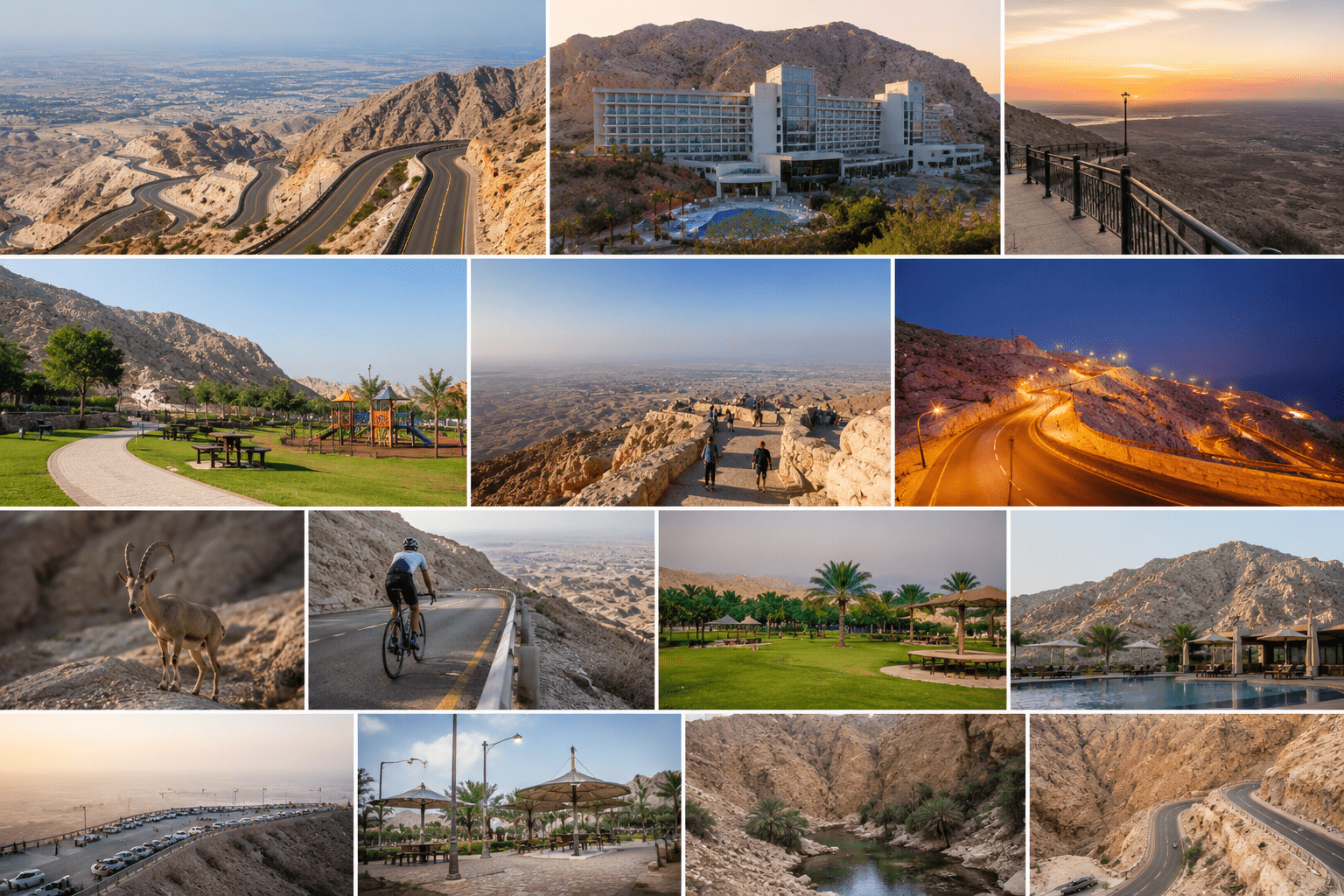
The jebel hafeet mountain experience starts the moment you begin the drive. The road has 60 hairpin turns, people count them, track them, make it a thing. Every turn reveals more landscape. The switchbacks are tight but well-maintained. Guardrails on the scary bits. The pavement is smooth.
Local cyclists treat this road like a training route. Road bikes, real gear, people timing themselves. The cycling community in Al Ain considers jebel hafeet a bucket-list climb. Motorcyclists come for the curves. Car enthusiasts come to push their vehicles safely. It’s become a known route for people who actually care about driving.
This is worth understanding because it means the jebel hafeet mountain experience isn’t just the viewpoint. The drive is part of the attraction. Taking it slowly, paying attention to the switchbacks, noticing how the landscape changes with each turn, that’s actually the highlight for a lot of people.
Things to Do at Jebel Hafeet: Activities Across Experience Levels
Viewpoint and Photography
The summit has a parking area and an actual viewpoint space with benches and interpretation boards (though they’re dated). This is where most visitors spend time. You can stand there for five minutes or five hours. Some people bring books. Some people bring cameras and spend hours waiting for light. Some people bring picnic baskets and make it a full afternoon.
Photography is genuinely excellent here, particularly during golden hour (that hour before sunset). The light hits the desert at an angle that makes everything glow. Shadows get long and defined. The landscape transforms. It’s why photographers specifically plan trips around this timing.
Hiking and Trail Walking
People hike Jebel hafeet mountain before sunrise or in the early morning hours. It’s about 8 kilometers from the base to the summit, taking 2-3 hours depending on fitness. The paths are established and reasonably clear. The elevation gain is real (1,249 meters vertical) so it’s legitimate exercise, but not technical climbing.
The hiking community around Jebel hafeet is friendly. Same people if you go regularly. The experience shifts from “alone with landscape” very early in the morning to “community hike” if you go post-sunrise when more people are on the trail.
Cycling Routes
Cyclists ride up the switchbacks specifically for the challenge and the routing. It’s a serious climb but doable for intermediate to strong cyclists. The road surface is good. The curves demand attention. It’s become a known training route.
Picnicking and Relaxation
Bring snacks, a blanket, park yourself at a scenic overlook. Some people make a full production of it with a proper cooler, multiple dishes, hours of sitting. Families do this. Couples do this. Groups of friends do this. It’s simple but it works.
Visiting Jebel Hafeet Park: Base Infrastructure and Facilities
The jebel hafeet park at the mountain base provides facilities that make exploring easier. Walking trails at ground level, shaded areas, parking, and access to hiking paths that lead up the mountain.
The park is well-maintained and functional. It’s not fancy. But it’s clean and organized. Good starting point if you’re planning to hike from the base rather than drive to the summit.
Accommodations and Dining: Staying at Mercure Grand Jebel Hafeet Al Ain Hotel
Mercure grand jebel hafeet al ain hotel is positioned at the mountain base with direct views of jebel hafeet from guest rooms. This is actually the main advantage of waking up to the mountain visible from your window.
The hotel has the standard amenities: pool, restaurants, business center, conference facilities (it caters to business travelers too, not just tourists). The rooms are clean and comfortable. The staff know the mountain and can advise on timing for sunrise, best routes for hiking, all that.
Is it worth staying here specifically for jebel hafeet al ain? Depends on your goals. If you want to go up for sunrise, the proximity is convenient. If you’re in Al Ain already, it’s a good location. If you’re coming just for the mountain, you can do a day trip from Dubai or Abu Dhabi city and save the hotel cost. The mountain itself doesn’t require an overnight visit unless you’re planning to explore Al Ain more comprehensively.
The restaurant at mercure grand jebel hafeet al ain hotel serves international and local Emirati food. Nothing exceptional but it’s solid. The views while dining are the real selling point.
Exploring Jebel Hafeet Al Ain: How the Mountain Anchors Broader Tourism
Understanding jebel hafeet al ain tourism requires understanding that the mountain doesn’t exist in isolation. It’s the geographic centerpiece of a tourism region that includes multiple attractions.
Al Ain Oasis is right there. Stunning green space in the middle of everything else. Palm trees, water channels, the contrast between the vegetation and desert is striking. Walking through the oasis takes you through landscaped gardens and natural pools. It’s peaceful. Most visitors combine oasis + mountain in a single day.
Al Ain Zoo is legitimately good. Better than people expect. They’ve invested in the facilities. Animal enclosures are decent. It’s not tiny. Families spend 2-3 hours there easily.
Al Ain Hot Springs (Ain Al Fayda) are warm mineral water pools that locals and tourists use. It’s not fancy but it’s a unique experience. Soaking in warm water outside in the desert is different.
Fort Al Jahili is historic and well-maintained. An actual functioning fort that you can walk through and see exhibits about regional history. It overlooks the oasis.
What ties all of these together is Al Ain’s geographic and historic significance. Jebel hafeet mountain is the physical anchor. The oasis is the water source. The fort is a historical structure. Visiting one makes sense. Visiting all of them makes even more sense because they tell a more complete story.
Frequently Asked Questions (FAQ's)
Yes, definitely.
Completely. There’s a paved road all the way up. You don’t need any special vehicle.
1,249 meters (4,098 feet) above sea level. It’s the highest point in Abu Dhabi.
No entry fee to drive up or visit the viewpoint. The mountain itself is free.
October to May is ideal.
About 15-20 minutes depending on traffic and how fast you take the curves.
