
Table of Contents
ToggleThe UAE runs a two-tier healthcare system, public facilities for nationals, and a large private sector that most expats and residents use day-to-day. Since 2007, health insurance has been mandatory for all private-sector employees, which means most people working in the country have baseline coverage before they arrive. What varies is the quality of that coverage, how to top it up, and what things cost when you pay out of pocket.
This guide covers how the system is structured, what insurance options exist, what medical care actually costs, and what to know about hospitals before you need one.
How the UAE Healthcare System Works
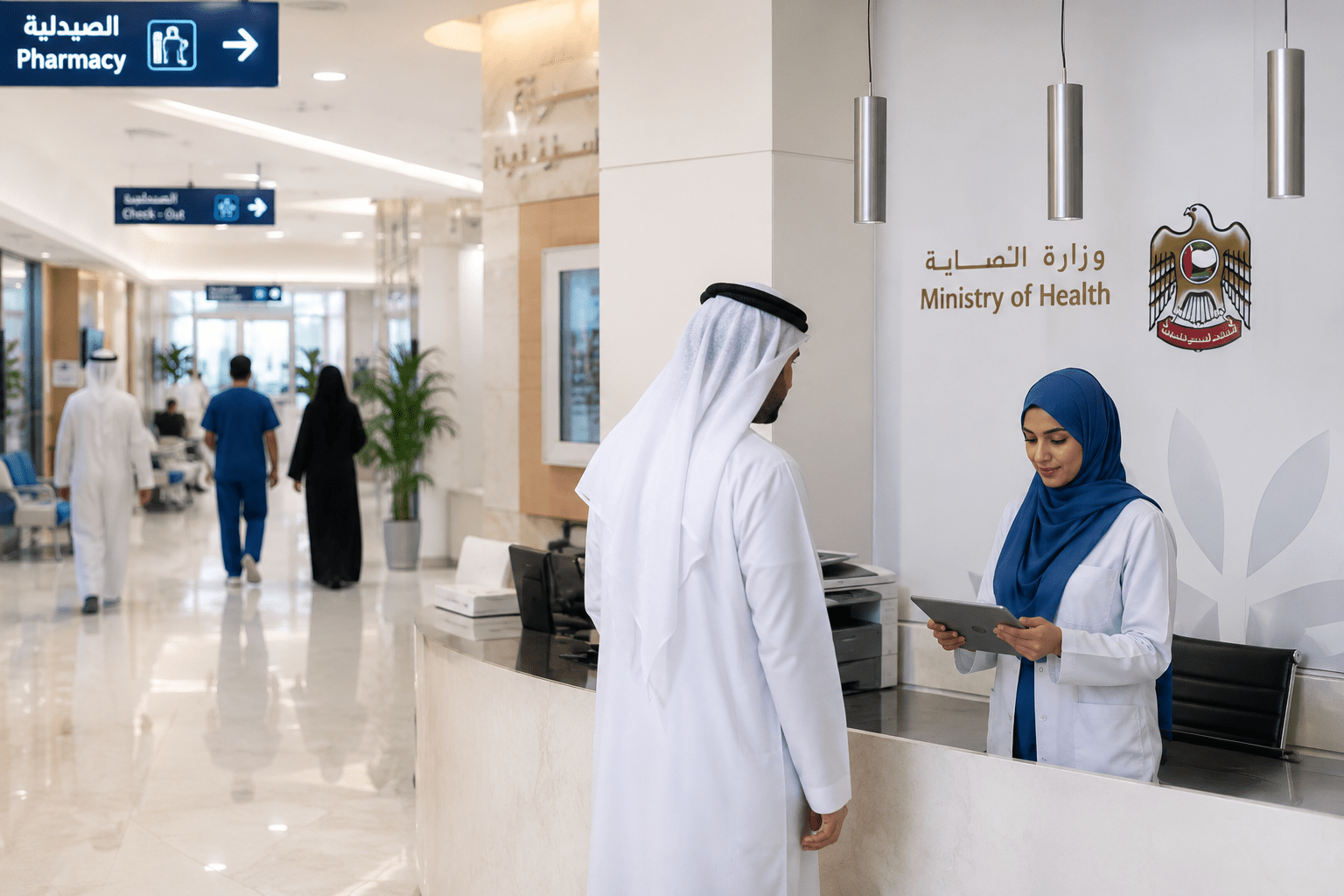
Healthcare in the UAE is regulated at both federal and emirate level. The federal Ministry of Health and Prevention sets national standards. Abu Dhabi’s Department of Health and Dubai’s Dubai Health Authority (DHA) operate their own licensing and oversight frameworks, which is why insurance valid in Abu Dhabi doesn’t always cover treatment in Dubai, and vice versa.
Public sector: Government hospitals and clinics provide free or heavily subsidised care to UAE nationals. Non-nationals can access public facilities, but pay for treatment typically at rates lower than private hospitals, though not free.
Private sector: The larger and faster-growing part of the system. Major private hospitals include Cleveland Clinic Abu Dhabi, American Hospital Dubai, Mediclinic, and Burjeel Holdings. These facilities employ internationally qualified doctors, hold Joint Commission International (JCI) accreditation, and operate to standards comparable to top hospitals in the US or UK.
Emergency care is available 24/7 at major hospitals across all seven emirates, with ambulance response times in urban areas typically under 10 minutes.
Health Insurance in the UAE
What's Mandatory
Health insurance for private-sector employees has been mandatory since 2007. Employers are legally required to provide coverage that applies to all nationalities. The law is enforced; companies that fail to insure employees face fines.
For dependents, visa issuance in Abu Dhabi requires proof of health insurance. Dubai has been rolling out similar requirements. If you’re sponsoring a family member’s visa, budget for their insurance from day one.
Types of Plans
Plan Type | Who It Suits | Coverage Level |
Employer group plan | Employed residents | Varies by employer confirm specifics before accepting a role |
DAMAN (public insurer) | UAE nationals, some residents | Subsidised for nationals; competitive for others |
Private individual plan | Self-employed, retirees, dependants | Cost depends on age and pre-existing conditions |
Enhanced employer plan | Those whose employer offers upgrades | Adds dental, maternity, specialist access |
Group employer plans generally offer better premiums than individual policies bought directly. If you’re employed, your employer’s plan is usually the cheapest starting point but check what it actually covers. Basic mandatory plans in Dubai, for example, often exclude dental, maternity, and mental health.
Key Private Insurers
Aetna, Allianz, AXA, Daman, and Cigna are among the most used providers. For self-employed expats or those whose employer plan is thin, comparing two or three providers directly is worth the time. Premiums vary significantly for near-identical coverage.
What Healthcare Costs Without Insurance
Service | Approximate Cost (AED) |
GP consultation (private clinic) | 150 – 400 |
Specialist consultation | 300 – 700 |
Dental cleaning | 150 – 300 |
Blood test panel | 200 – 600 |
Emergency room visit (before tests) | 500 – 1,000 |
MRI scan | 800 – 2,000 |
Cardiac surgery | 50,000 – 150,000+ |
Childbirth (private hospital) | 8,000 – 25,000 |
Insurance covers most of these costs for employed residents. The gap matters most for self-employed individuals, those between jobs, and anyone whose employer provides minimal coverage.
Hospitals and Medical Facilities
Major Private Hospitals
Cleveland Clinic Abu Dhabi: part of the Cleveland Clinic network, with particular strength in cardiac, neurological, and oncology care. Consistently ranked among the top hospitals in the Middle East.
American Hospital Dubai: the first JCI-accredited hospital in the UAE, with a large expat patient base and English-language administration throughout.
Mediclinic: a network of hospitals and clinics across Dubai and Abu Dhabi, strong on breadth and accessibility. Multiple locations reduce travel time for routine care.
Burjeel Holdings: Abu Dhabi-based group with specialty centres covering oncology, orthopaedics, and rehabilitation.
Public Hospitals
Rashid Hospital and Dubai Hospital in Dubai, and Sheikh Khalifa Medical City in Abu Dhabi, are the major public tertiary facilities. They handle the bulk of emergency and critical care for the country and are well-equipped for complex cases. Wait times are longer than private facilities, and the experience is less personalised, but clinical standards are maintained.
Accreditation
JCI accreditation is the benchmark most used to assess UAE hospitals internationally. Most major private facilities hold it. Checking JCI status before choosing a hospital for elective or planned treatment is a simple due diligence step.
Medical Tourism
The UAE actively positions itself as a regional medical tourism destination, and the infrastructure supports it. People travel from across the Gulf, South Asia, and East Africa for cardiac surgery, orthopaedic procedures, fertility treatments, oncology care, and cosmetic surgery.
The draw is a combination of factors: pricing below Western rates, internationally trained specialists, advanced diagnostic equipment, and the ability to combine treatment with recovery in a country with good hotels, flights, and a moderate climate in winter. Most major hospitals have dedicated international patient departments that handle appointment scheduling, visa letters, accommodation coordination, and translation.
For preventive care and diagnostics health screenings, advanced imaging, specialist opinions the UAE is increasingly used by visitors who can access these services faster or more affordably than at home.
Digital Health and Telemedicine
Telemedicine has expanded significantly since 2020. Platforms including Medcare, Etihad Health, and government-backed services offer remote GP and specialist consultations, prescription renewals, and chronic disease monitoring without requiring a clinic visit.
The DHA’s Salama app and the SEHA network in Abu Dhabi both support digital booking and virtual consultations. For routine care prescription renewals, follow-up appointments, minor illness remote consultation is now a practical and common option.
AI-assisted diagnostics and robotic surgery are being integrated into major hospitals. Cleveland Clinic Abu Dhabi and American Hospital Dubai have both invested in robotic surgical systems for cardiac, urological, and orthopaedic procedures.
What Expats Should Know Before They Need a Doctor
Check your insurance emirate coverage. A plan issued in Abu Dhabi may not cover treatment in Dubai and vice versa. Read the policy documentation, not just the summary card your employer hands over.
Confirm your employer’s plan details. Mandatory insurance in Dubai can be minimal; some basic plans exclude specialist referrals, dental, and maternity. Know what’s excluded before you assume you’re covered.
Keep a copy of your insurance card and emergency numbers accessible on your phone. UAE hospitals generally ask for insurance details at the point of registration, not after treatment.
Public hospitals are cheaper but slower for non-emergency care. If you’re uninsured or underinsured, public facilities are a real option you pay, but at lower rates than private.
Multilingual care is standard. Most major hospitals operate primarily in English and Arabic, with staff across many facilities speaking Urdu, Tagalog, and other languages common among the expat population. Communication barriers are less of an issue here than in many countries.
Final Thoughts
Health care in the UAE represents an investment in the present and future wellbeing of the population. Whether through public clinics, private hospitals, or specialized centers, residents and visitors can access medical services that rival those in developed Western countries. The combination of universal insurance mandates, modern facilities, international expertise, and growing digital innovation creates a healthcare environment that functions well for most people. For expats and residents, understanding this system, how insurance works, where hospitals are located, and what standards apply is essential to navigating healthcare effectively in the Emirates.
Frequently Asked Questions (FAQ's)
Start with your employer’s group plan. It’s usually the best premium for the coverage level. If you’re self-employed or your employer’s plan is thin, compare DAMAN’s public rates against private insurers like Aetna, Allianz, and AXA based on your actual healthcare use and dependent requirements.
GP consultations run AED 150–400. Specialist visits cost AED 300–700. Complex procedures like cardiac surgery range from AED 50,000 to AED 150,000+. Insurance covers most of this for employed residents; the out-of-pocket exposure is most significant for the self-employed and those on minimal employer plans.
Most doctors at accredited private hospitals hold qualifications from recognised medical schools in the US, UK, Canada, or Australia, and must pass UAE licensing exams to practise. Checking a hospital’s JCI accreditation status is a reasonable proxy for overall staff and facility standards.
Non-nationals are not entitled to free public healthcare except in genuine emergencies. Public facilities are accessible to all, but non-nationals pay for treatment. Rates are typically lower than private hospitals. Most expats use private facilities covered by employer or personal insurance.
Widely available. Platforms including Medcare, Etihad Health, and government-backed services offer virtual consultations for primary care and many specialist services. The DHA’s Salama app and SEHA’s platform in Abu Dhabi both support digital booking and remote appointments. For routine care, telemedicine is a practical first step before committing to a clinic visit.
