
Table of Contents
ToggleThe United Arab Emirates is known around the world for its modern cities, ambitious architecture, and international communities, but beneath the contemporary skyline is a cultural heritage shaped by the desert, sea, Islam, family life, trade, craftsmanship, and hospitality.
Emirati culture and traditions continue to influence everyday life in the UAE. From the welcoming majlis and the serving of Arabic coffee to traditional clothing, Al Sadu weaving, falconry, poetry, food, weddings, and national celebrations, many customs connect modern Emirati society with generations of heritage.
The UAE Government describes the country's culture as reflecting traditional Arab and Islamic values, while also noting the influence of the country's environment and terrain on traditional lifestyles. UAE+1
For visitors, learning about these traditions can make a trip to the UAE more meaningful. For residents and younger generations, cultural heritage remains an important connection to the country's history and identity.
What Is Emirati Culture?
Emirati culture refers to the traditions, customs, values, arts, food, social practices, clothing, celebrations, and heritage that have developed among the people of the United Arab Emirates.
It has been influenced by Arab and Islamic traditions, as well as the UAE's desert and coastal environments. Historically, communities adapted to life involving fishing, pearl diving, trading, oasis agriculture, camel herding, and desert travel.
The UAE Government identifies architecture, occupations, sports, traditions, arts, crafts, food, historical places, lifestyle, and values as important parts of the country's heritage. U.AE
This heritage has not disappeared with modernization. Instead, traditional practices exist alongside contemporary cities, international businesses, modern education, and a highly diverse population.
That combination is one of the most interesting aspects of UAE culture and traditions.
History and Influences on Emirati Traditions
The history of the UAE stretches far beyond the formation of the federation in 1971.
Different communities developed livelihoods based on their surroundings. Coastal communities were connected to fishing, maritime trade, and pearl diving, while desert communities developed knowledge of camel herding, navigation, crafts, poetry, and survival in an arid environment.
Oases also played an important role in settlement and agriculture.
These experiences influenced traditions that remain recognizable today.
For example:
- The desert influenced Bedouin traditions, camel culture, poetry, and falconry.
- The sea influenced fishing, pearl diving, boatbuilding, and maritime trade.
- Oases supported agriculture and date-palm cultivation.
- Islam influenced religious practices, social customs, food, clothing, and celebrations.
- Trade created connections with neighboring regions and wider parts of Asia and the Indian Ocean.
The UAE's official cultural information emphasizes the relationship between traditional Arab and Islamic values and the country's environment. U.AE
Also Read: The Al Fahidi Historical Neighborhood: Dubai's Pulse of Culture
Emirati Hospitality and Generosity
One of the most recognizable aspects of Emirati culture is hospitality.
Welcoming guests, offering refreshments, sharing food, and making visitors feel comfortable are important parts of social life.
Hospitality can be seen in the home, the majlis, family gatherings, weddings, festivals, and other social occasions.
Arabic coffee, dates, sweets, and meals are commonly associated with welcoming guests.
UNESCO recognizes Arabic coffee as an element of intangible cultural heritage and describes its preparation, serving, and consumption as expressions of hospitality, generosity, and social etiquette. ICH UNESCO
This tradition is more than simply serving a drink. It represents a social interaction in which guests are welcomed and respected.
For visitors, accepting coffee or dates when offered can be a simple way to participate respectfully in local hospitality.
The Majlis: Heart of Emirati Social Life
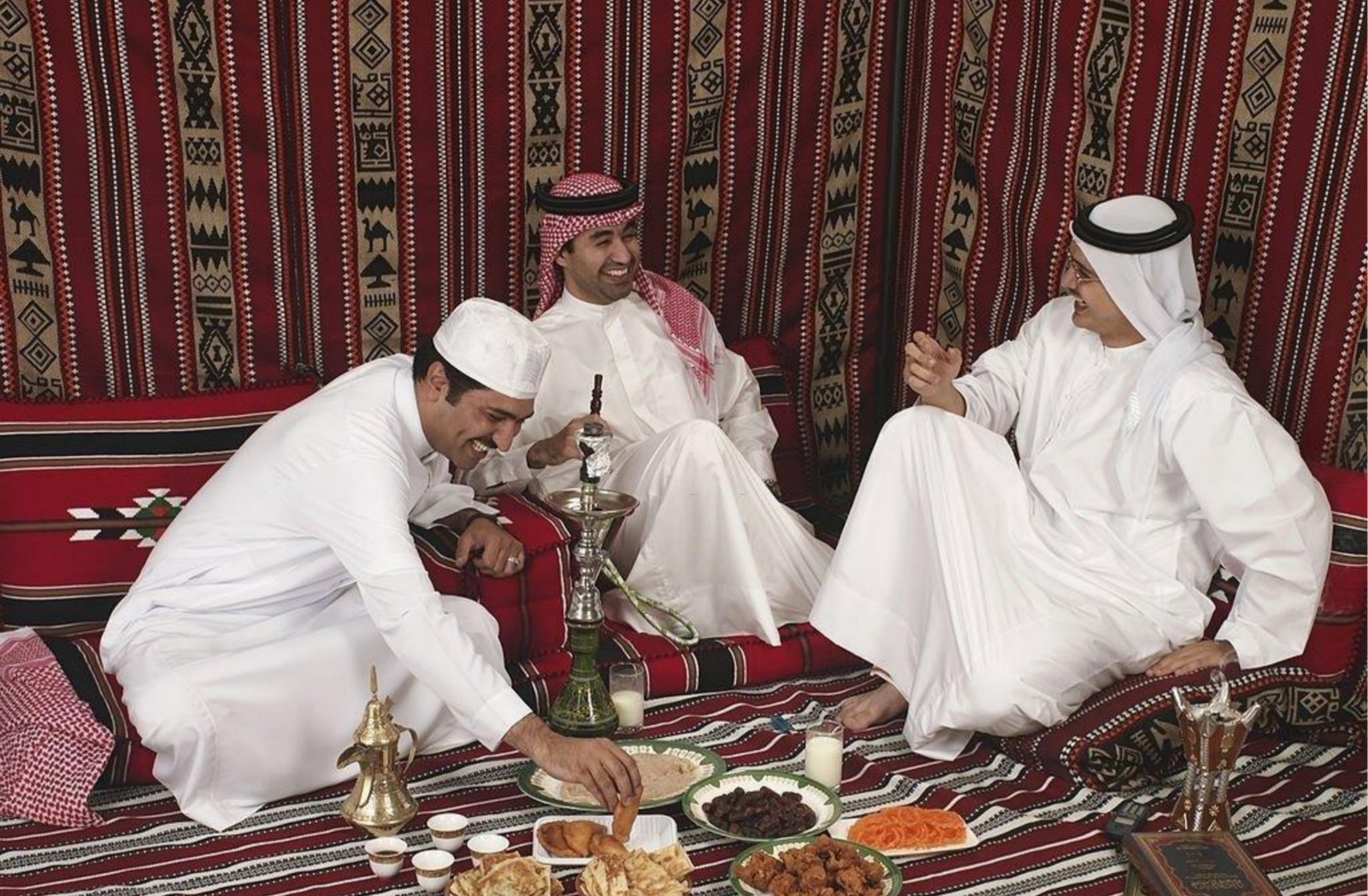
The majlis is an important part of traditional Emirati social life.
The Arabic word refers broadly to a place where people sit and gather. Traditionally, the majlis can be a place for receiving guests, discussing community matters, exchanging news, socializing, and resolving issues.
UNESCO inscribed Majlis, a cultural and social space on the Representative List of the Intangible Cultural Heritage of Humanity in 2015. The organization describes the majlis as a place where community members gather, receive guests, exchange news, socialize, and discuss local issues. ICH UNESCO
A traditional majlis may feature carpets, cushions, and facilities for preparing Arabic coffee and other refreshments.
Today, the concept remains relevant even as homes and social spaces have become more modern.
Why the majlis matters
The majlis represents several important social ideas:
- Hospitality
- Community
- Conversation
- Respect for guests
- Knowledge sharing
- Family and social relationships
- Community discussion
For anyone studying UAE customs and traditions, the majlis provides an excellent example of how physical spaces can reflect social values.
Arabic Coffee and Dates
Arabic coffee, often served from a traditional dallah, is strongly associated with Emirati hospitality.
The practice has particular etiquette. UNESCO notes that guests and older people may be served first and that coffee is traditionally poured with the right hand. A guest can signal that they have finished by shaking the cup. ICH UNESCO
Dates are also closely connected with hospitality and the UAE's agricultural heritage.
The date palm has played an important role in life across the region, providing food and other useful materials.
UNESCO lists Date palm, knowledge, skills, traditions and practices as intangible cultural heritage, with the UAE among the participating countries. ICH UNESCO
Together, coffee and dates create a simple but meaningful expression of welcome.
Traditional Emirati Clothing
Traditional clothing is another visible part of Emirati culture and traditions.
Men's clothing
The traditional Emirati male outfit commonly includes the kandura, a long garment usually worn with a head covering such as a ghutra.
The clothing is associated with regional culture and remains widely visible in contemporary UAE society.
Women's clothing
The abaya is an important traditional garment worn by many Emirati women.
Contemporary abayas can vary considerably in design, materials, colors, and decoration while maintaining links with traditional dress.
Traditional clothing and identity
Clothing can communicate cultural identity while also reflecting modern fashion.
Visitors should remember that dress expectations can vary depending on the location and occasion. More conservative clothing is generally appropriate when visiting religious sites and traditional cultural settings.
Emirati Food and Culinary Traditions
Food provides another way to understand Emirati heritage.
Traditional Emirati cuisine developed around ingredients that were available locally and through historical trade connections.
Popular dishes associated with Emirati cuisine include:
- Harees
- Machboos
- Thareed
- Balaleet
- Luqaimat
- Dates
- Arabic coffee
Harees is particularly significant. UNESCO inscribed the know-how, skills, and practices associated with the dish on the Representative List in 2023. ICH UNESCO
Food is often connected with family gatherings, Ramadan, weddings, national celebrations, and hospitality.
Rather than viewing Emirati cuisine only as a list of dishes, it is useful to understand food as part of a wider social tradition involving preparation, sharing, and gathering.
Al Sadu and Traditional Crafts
Al Sadu is a traditional weaving practice associated with Bedouin communities in the UAE.
The craft uses natural fibers and traditional weaving techniques to produce decorative and functional items.
UNESCO inscribed Al Sadu, traditional weaving skills in the United Arab Emirates on the Representative List in 2025. UNESCO describes the practice as involving knowledge passed through generations and traditionally practiced by Bedouin women in rural communities. ICH UNESCO
Traditional Al Sadu patterns often feature geometric designs and colors associated with the craft.
The importance of Al Sadu goes beyond the finished textile. The technique represents knowledge, craftsmanship, community participation, and cultural transmission.
Other traditional crafts and skills include embroidery, pottery, palm-leaf crafts, and perfume-related traditions.
Falconry and Desert Heritage
Falconry is one of the best-known traditions connected with the UAE's desert heritage.
Historically, falcons were used for hunting and were closely connected with desert life. Today, falconry continues as a cultural practice and symbol of heritage.
UNESCO lists Falconry, a living human heritage, with the UAE among the participating countries. The practice was inscribed in 2021. ICH UNESCO
Falconry also demonstrates the traditional relationship between people, animals, and the desert environment.
Visitors interested in Emirati heritage can learn about falconry through cultural centers, heritage attractions, and specialist experiences.
Traditional Music, Dance and Poetry
Music, dance, and poetry are important forms of cultural expression in Emirati society.
Traditional performances can be seen during national celebrations, weddings, festivals, cultural events, and heritage programs.
Al Ayyala
Al Ayyala is a traditional performing art involving coordinated movement, music, poetry, and symbolic performances.
It is recognized by UNESCO as intangible cultural heritage shared by the UAE and Oman. ICH UNESCO
Poetry
Poetry has a long-standing role in Arabian culture.
Traditional forms such as Al Taghrooda are connected with oral traditions and desert life. UNESCO lists Al-Taghrooda as traditional Bedouin chanted poetry in the UAE and Oman. ICH UNESCO
Weddings and celebrations
Music and performance also form part of traditional celebrations.
UNESCO's current UAE heritage listings include the zaffa in the traditional wedding, added to the Representative List in 2025. ICH UNESCO
Emirati Wedding Traditions
Emirati weddings bring together family, food, clothing, music, hospitality, and celebration.
Traditional wedding customs can vary between families and communities, but weddings often provide an opportunity for cultural practices to be shared across generations.
Elements may include:
- Traditional clothing
- Family gatherings
- Henna
- Arabic coffee and dates
- Traditional food
- Music and poetry
- Zaffa
- Gifts and celebrations
Henna rituals are also recognized by UNESCO as intangible cultural heritage, with the UAE among the countries participating in the multinational inscription. ICH UNESCO
Modern Emirati weddings can combine traditional customs with contemporary venues, decorations, photography, and event styles.
Ramadan and Religious Traditions
Islam has an important influence on life and traditions in the UAE.
The UAE Government identifies Islam as the official religion and notes its influence on areas including clothing, food, drink, customs, traditions, and religious practices. U.AE
Ramadan is an especially significant period.
During Ramadan, Muslims fast from dawn until sunset. Families and communities come together for iftar, the evening meal that breaks the fast.
The month also emphasizes prayer, reflection, charity, family, and community.
For visitors, Ramadan can provide an opportunity to learn about an important part of Islamic and Emirati life. Visitors should follow local guidance and show respect for those fasting.
Family and Community Values
Family has traditionally been an important part of Emirati social life.
Extended family relationships, respect for older generations, hospitality, and community connections remain important cultural themes.
Older family members can play an important role in passing knowledge about traditions to younger generations.
This intergenerational transfer can be seen in:
- Food preparation
- Storytelling
- Traditional crafts
- Poetry
- Wedding customs
- Religious practices
- Hospitality
- Traditional celebrations
The transmission of knowledge is particularly visible in practices recognized by UNESCO, including Al Sadu and Arabic coffee traditions. ICH UNESCO
Traditional Architecture and Heritage
Traditional Emirati architecture developed in response to the climate and available materials.
Historic homes could feature courtyards, shaded spaces, thick walls, and wind towers designed to improve ventilation.
Places such as Dubai's historic neighborhoods allow visitors to see examples of traditional architecture alongside the modern city.
The Al Fahidi Historical Neighbourhood is particularly useful for understanding Dubai's earlier urban environment, while cultural institutions and heritage districts across the UAE provide additional opportunities to explore local history.
Visit Dubai also highlights traditional crafts, architecture, pearl diving, falconry, and hospitality as important parts of the emirate's heritage. Visit Dubai
Emirati Culture in the Modern UAE
One of the defining features of contemporary UAE society is the coexistence of traditional heritage with modern urban life.
Dubai and Abu Dhabi are highly international cities, but traditional clothing, Arabic coffee, majlis gatherings, cultural festivals, traditional food, and heritage performances remain visible.
The UAE Government also maintains cultural programs and initiatives aimed at preserving and promoting heritage. U.AE
UNESCO's heritage listings demonstrate that these practices are not simply historical artifacts. Several Emirati cultural elements have been formally recognized as living intangible heritage, including Arabic coffee, majlis, falconry, Al Sadu, Al Ayyala, harees, and others. ICH UNESCO
This creates an interesting cultural landscape where a person can experience a traditional majlis or heritage performance while being only minutes away from a modern business district.
Where Visitors Can Experience Emirati Culture
Visitors interested in Emirati culture and traditions can explore heritage-focused attractions and cultural experiences throughout the UAE.
Dubai
Consider exploring:
- Al Fahidi Historical Neighbourhood
- Al Shindagha Museum
- Traditional heritage areas
- Cultural festivals
- Emirati food experiences
- Falconry and desert heritage experiences
Visit Dubai highlights Al Shindagha Museum, traditional crafts, falconry, pearl diving, and Arabic coffee among its heritage experiences. Visit Dubai
Abu Dhabi
Abu Dhabi offers museums, heritage sites, cultural institutions, traditional markets, and events where visitors can learn about Emirati history and culture.
Across the UAE
Each emirate has its own cultural landscapes and heritage sites.
Visitors can explore:
- Heritage villages
- Museums
- Traditional markets
- Cultural festivals
- Desert experiences
- Historic neighborhoods
- Local food experiences
- Craft demonstrations
For current opening hours, event dates, and visitor requirements, always check the official attraction or tourism authority before visiting.
How Visitors Can Respect Emirati Customs
Understanding basic etiquette can make cultural experiences more comfortable for both visitors and residents.
Dress respectfully
Dress expectations vary by location, but modest clothing is generally appropriate in cultural and religious settings.
Ask before photographing people
Always ask permission before taking close-up photographs of individuals.
Use your right hand when appropriate
The right hand is traditionally used for offering or receiving items such as food and coffee.
Respect religious practices
During Ramadan and at religious sites, visitors should follow local guidance and behave respectfully.
Accept hospitality graciously
If someone offers Arabic coffee or dates, accepting them can be a polite way to participate in local hospitality.
Learn before judging
Cultural practices can differ from one family or community to another. Approach traditions with curiosity rather than assuming every Emirati household follows exactly the same customs.
Conclusion
Emirati culture and traditions offer a window into the history and values that shaped the United Arab Emirates before and after the country's rapid modernization.
Hospitality, the majlis, Arabic coffee, dates, traditional clothing, Emirati cuisine, Al Sadu weaving, falconry, poetry, music, weddings, and religious traditions all contribute to the country's cultural heritage.
What makes UAE culture particularly interesting today is the way traditional practices continue alongside modern cities and international communities. Heritage is not limited to museums or historic buildings; many traditions continue to be practiced, celebrated, taught, and adapted by communities.
For visitors, learning about these customs can make a trip more respectful and rewarding. For residents and younger generations, cultural traditions provide an important connection between the UAE's past and its present.
As the UAE continues to develop, the preservation of its cultural heritage remains an important part of understanding the country's identity.
References
- UAE Government — Culture The official UAE Government overview of culture, social life, heritage, art, food, tolerance, and traditions. U.AE
- UNESCO — Intangible Cultural Heritage of the United Arab Emirates Useful for verifying UAE cultural practices inscribed on UNESCO's lists, including Arabic coffee, majlis, falconry, Al Sadu, harees, Al Ayyala, and other traditions. ICH UNESCO
- UNESCO — Arabic Coffee, a Symbol of Generosity Reference for Arabic coffee, hospitality, serving traditions, and associated social etiquette. ICH UNESCO
- UNESCO — Majlis, a Cultural and Social Space Reference for the social role and cultural importance of the majlis. ICH UNESCO
- UNESCO — Al Sadu, Traditional Weaving Skills in the UAE Reference for Al Sadu weaving, its techniques, cultural transmission, and 2025 inscription. ICH UNESCO
- Visit Dubai — Local Culture and Heritage Reference for Dubai's traditional crafts, falconry, pearl diving, Arabic coffee, hospitality, food, clothing, and heritage experiences. Visit Dubai
- UAE Government — Fact Sheet Reference for official information about the UAE's language, religion, and national background. U.AE
Frequently Asked Questions (FAQ's)
Important traditions include hospitality, majlis gatherings, Arabic coffee, traditional clothing, food, falconry, Al Sadu weaving, poetry, traditional music and dance, weddings, and religious practices. U.AE
Emirati hospitality emphasizes welcoming guests, generosity, sharing food and drinks, and creating a comfortable social environment. Arabic coffee and dates are strongly associated with this tradition. ICH UNESCO
A majlis is a traditional social gathering space where people can receive guests, discuss issues, exchange news, socialize, and share refreshments. UNESCO recognizes the majlis as intangible cultural heritage. ICH UNESCO
Al Sadu is a traditional weaving practice associated with Bedouin communities. The UAE’s Al Sadu weaving skills were inscribed on UNESCO’s Representative List of the Intangible Cultural Heritage of Humanity in 2025. ICH UNESCO
Arabic coffee is associated with hospitality, generosity, respect, and social interaction. Its preparation and serving have specific traditions and etiquette. ICH UNESCO
Traditional Emirati foods include harees, machboos, thareed, balaleet, and luqaimat. Harees is also recognized by UNESCO as intangible cultural heritage. ICH UNESCO
