
Table of Contents
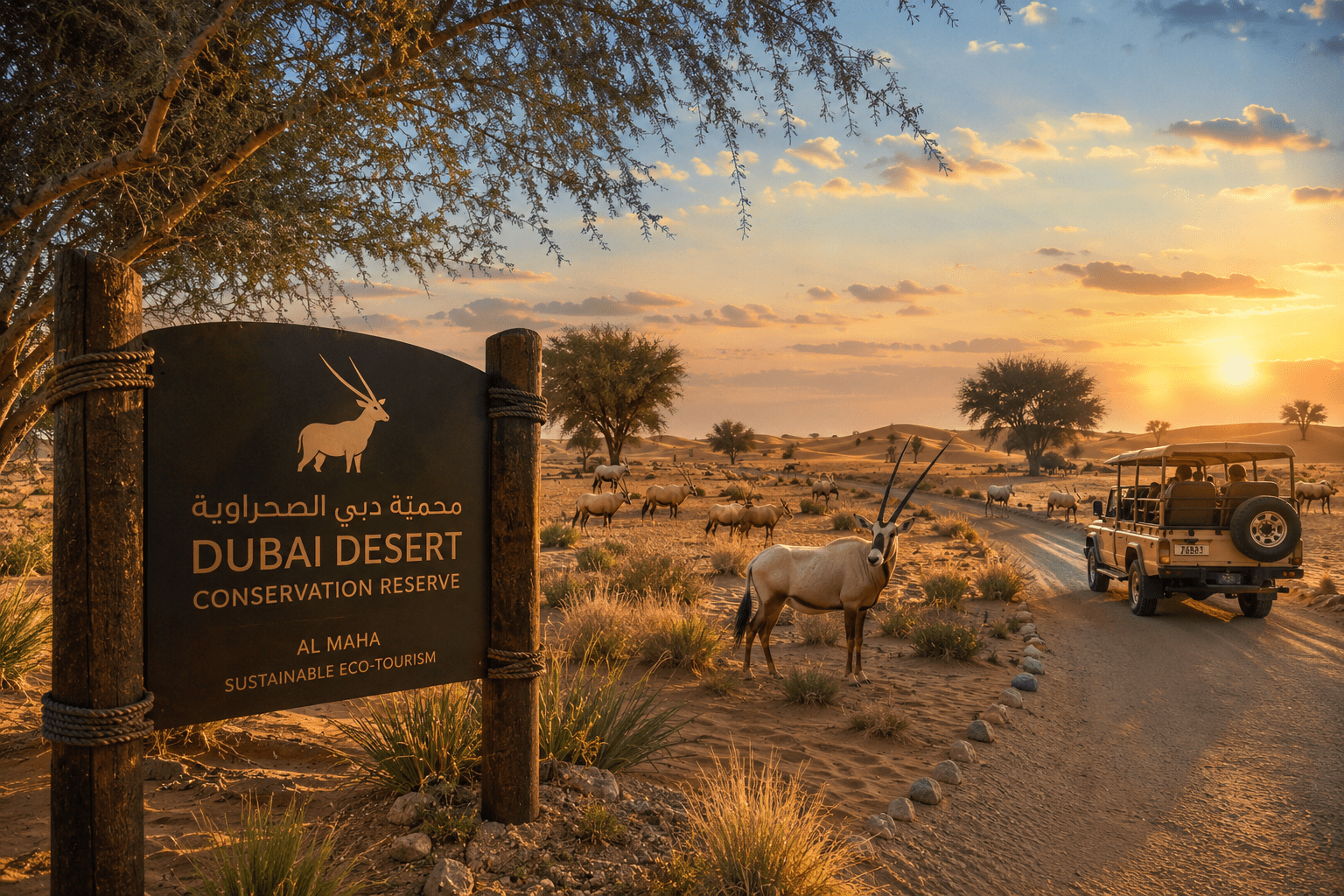
ToggleDubai gets talked about for its skyline and its malls, but about 40 minutes outside the city, along the Dubai-Al Ain Road, there’s a version of the emirate that has nothing to do with either. The Dubai Desert Conservation Reserve (DDCR) covers roughly 225 square kilometers, close to 5% of Dubai’s total land area, and it’s been protecting the Arabian desert ecosystem since 2002. No traffic, no towers. Just sand, scrub, and animals that have spent thousands of years figuring out how to survive out here.
This guide covers why the reserve exists, what actually lives there, what you can do on a visit, and the practical stuff (timing, clothing, water) that makes the difference between a good desert trip and a miserable one.
Why the Reserve Exists
The Dubai government set up the DDCR in 2002 to protect a stretch of the Arabian desert that was otherwise at risk from development and overgrazing. It was one of the first protected areas of its kind in the region, and it still functions as both a conservation zone and a working example of tourism that doesn’t wreck the thing people come to see.
That balance is really the point of the place. The reserve funds conservation research, runs environmental education programs, and licenses only a handful of tour operators to bring visitors in, which keeps the human footprint small relative to the size of the land.
The Wildlife You'll Actually See
The headline animal is the Arabian oryx. It was hunted to extinction in the wild by the 1970s, and the population inside the DDCR is part of the broader reintroduction effort that’s brought the species back from the brink; you’ll recognize them by the long straight horns and almost pure-white coats.
Beyond the oryx, keep an eye out for:
- Arabian gazelles– fast, lean, and skittish, usually spotted on the open plains rather than close up
- Desert foxes– nocturnal, big-eared, and rarely seen outside of guided evening drives
- Spiny-tailed lizards– slow-moving but well armored, a favorite with kids on the trails
- Falcons and other birds of prey– the reserve is genuinely good birdwatching territory if that’s your thing
None of these animals are performing for visitors. Sightings depend on timing, season, and a bit of luck, which is part of what makes it feel like a real reserve rather than a safari park.
What There Is to Do
Dune bashing and desert safaris. The classic option: a 4×4 driven by someone who knows exactly how much speed a dune can take, usually timed around sunset for the photos. It’s more thrill ride than wildlife encounter, but most operators build in stops for both.
Guided wildlife drives. Slower, quieter, and better if you actually want to see animals rather than adrenaline. Trained naturalists run these in the cooler parts of the day, early morning or late afternoon, when the wildlife is more active and less interested in hiding from the heat.
Walking trails. The DDCR has marked nature trails for people who’d rather move at their own pace. Guides along these routes tend to know the plant life as well as the animals, which turns a walk into more of a slow-motion biology lesson.
Stargazing. Once the sun’s down and the city glows far enough away, the reserve’s skies are some of the clearest in the UAE. Several of the resorts inside the reserve run stargazing sessions with someone who actually knows the constellations, rather than just handing you a telescope.
Planning Your Visit
When to go. October through April is the window. Summer regularly pushes past 40°C (104°F), which turns a desert walk into a survival exercise rather than a nice afternoon. If you’re visiting outside those cooler months, stick to early morning or late afternoon.
What to wear. Light, breathable fabric, a hat, sunglasses, and shoes that can handle sand, not flip-flops. Sunscreen is non-negotiable regardless of season.
Water. More than you think you need. The desert air pulls moisture out of you faster than you’ll notice, especially if you’re hiking or out on a dune-bashing trip.
Respect the wildlife. Keep your distance and let animals behave naturally. The reserve’s conservation status depends on visitors not treating it like a petting zoo.
Getting there. It’s a short drive from central Dubai via the Dubai-Al Ain Road (E66), and most tour operators include pickup and drop-off if you’re staying in the city. Driving yourself is straightforward; just follow the signage once you’re on the E66.
Is It Worth the Trip?
If your image of Dubai is entirely glass towers and shopping malls, the DDCR is a useful correction. It’s not a manufactured attraction, it’s a functioning conservation reserve that happens to let people in under controlled conditions, and that distinction shows in how the visit feels. Whether you’re there for the dune bashing, the wildlife drives, or just an evening under a genuinely dark sky, it’s one of the few places near Dubai where the desert still gets to be a desert.
Final Thoughts
Getting prayer time dubai right comes down to two things: trusting a source that’s tied to IACAD or AWQAF, and making sure your app’s location and calculation method are actually set to Dubai rather than left on a generic default. Do that once and the daily shifts in prayer time take care of themselves. Whether you’re a resident building a routine around five fixed points in your day or a visitor planning around Jumu’ah and mosque visits during a longer UAE trip, this is one part of city life that’s genuinely easy to get right once you know where to look. For more on planning your time in the city, our Dubai travel guide and things to do in the UAE hub are good next stops.
FAQs
Frequently Asked Questions (FAQ's)
Arabian oryx, desert foxes, Arabian gazelles, spiny-tailed lizards, and birds of prey including falcons and eagles, across the reserve’s protected habitat.
October to April, when temperatures are cooler. Summer highs can exceed 40°C (104°F), so early morning or late afternoon visits are best year-round.
It’s a short drive from central Dubai via the Dubai-Al Ain Road (E66). Most desert safaris and tours include pickup and drop-off from the city.
Dune bashing and desert safaris, guided wildlife-watching drives, nature hikes along desert trails, and stargazing sessions under some of the UAE’s clearest night skies.
The Dubai government set it up in 2002 to protect the Arabian desert ecosystem, safeguard native and endangered species, and support sustainable, low-impact tourism.
