
Table of Contents
ToggleI’ve lost count of how many times I’ve been asked “is a desert safari Dubai trip actually worth it or is it just a tourist trap with extra sand.” Fair question. I’ve been out to the dunes more times than I can count for UAE Weeklys, on the cheap group tours and the pricier private ones, and the honest answer is it depends entirely on which operator you book and what you actually want out of the evening. A proper desert safari Dubai experience should give you three things at minimum: a real off-road dune drive with a driver who knows what they’re doing, a camp that isn’t just plastic chairs under a tarp, and food that doesn’t taste like it was reheated twice. Get those three right and everything else, the henna, the falcon photos, the shisha, is a bonus.
What Actually Counts as a Desert Safari in Dubai
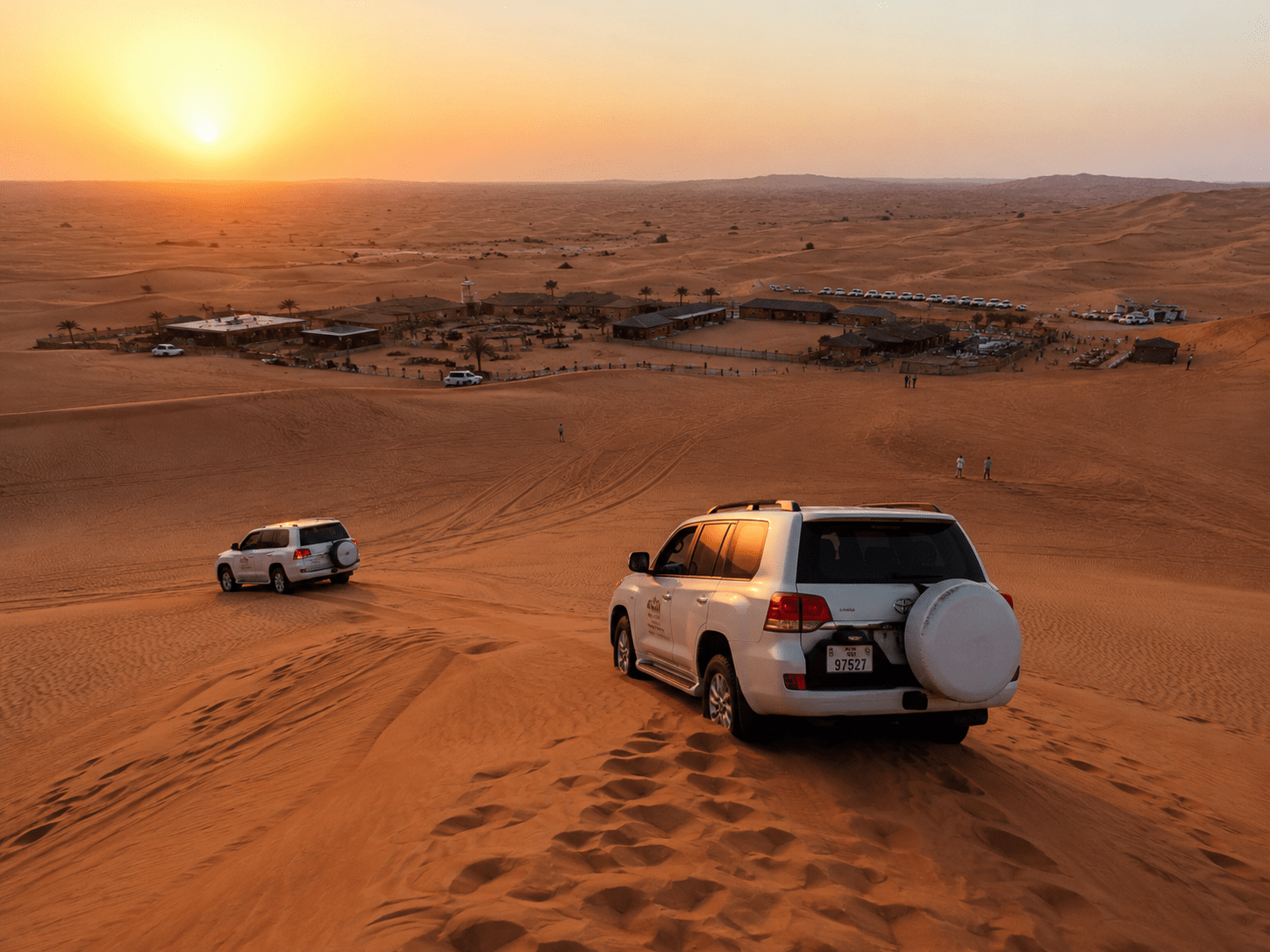
A desert safari Dubai package is built around a 4×4 drive into the Al Marmoom or Lahbab desert areas outside the city, usually followed by a stop at a Bedouin-style camp. Most operators use Toyota Land Cruisers because they hold up better on soft sand than smaller SUVs, and your driver will let air out of the tyres before hitting the dunes to improve grip. This isn’t a scenic drive. The car tips at angles that feel wrong the first few times, drops off the crest of a dune, and catches itself right before you’d swear you were about to roll. Some people love it. My cousin threw up twice and swore never again. Worth knowing that going in, especially if you’re prone to motion sickness or bringing kids under six, since most reputable operators won’t take very young children on the dune bashing portion at all.
The Main Types of Dubai Desert Safari Tours
Your trip has to start at Al Fahidi Fort, it is one of the oldest buildings in the city. The fort was built in 1787 and it the Dubai Museum. The museum provides a detailed account of the life in the Emirate region before the discovery of oil. You can expect to see a wide range of exhibits, from authentic ancient artifacts and reconstructed traditional homes to exhibits showing practices like pearl diving. You will definitely learn a lot about the city and its history.
Desert Safari Dubai Price: What You're Actually Paying For
Here’s where I’ll save you some frustration. Desert safari dubai price ranges wildly, from around AED 75 for a bare-bones shared group tour up to AED 500 or more per person for a private VIP experience, and the gap between the cheapest and priciest options is bigger than most first-time bookers expect. A standard shared evening safari with BBQ dinner typically runs AED 100 to AED 180 per person. Add live entertainment like a tanoura dance or fire show and you’re looking at AED 150 to AED 250. Private tours, where you’re not sharing a vehicle with strangers, start around AED 350 and climb depending on the camp tier and whether alcohol is included, since not every camp serves it. The cheapest listings you’ll see on booking sites often exclude the dinner entirely or cram twenty people into a single sitting with a thirty-minute window to eat, so read what’s actually included rather than just comparing the headline number. I’d rather pay an extra AED 50 and get a driver who isn’t rushing five other tours that same evening.
What's Included in a Dubai Desert Safari Dinner
A typical Dubai desert safari dinner is a buffet-style spread at the camp, usually grilled meats, Arabic mezze like hummus and moutabal, rice dishes, salads, and Arabic sweets like baklava or umm ali for dessert. Vegetarian and halal options are standard across nearly every operator since the local market demands it, but if you have specific dietary restrictions it’s worth messaging the operator directly rather than assuming. Some of the mid-range and premium camps now offer live cooking stations where you can watch your shawarma or grilled kebabs made to order, which sounds like a small thing until you’re comparing it to a chafing dish that’s been sitting under a heat lamp for two hours. Entertainment usually runs alongside dinner rather than after it: a tanoura spinning dancer, sometimes a fire performer, and at the more traditional camps a falconry demonstration earlier in the evening before the sun goes down. Henna painting and shisha are almost always available but typically cost extra unless your package specifically states otherwise.
Abu Dhabi Desert Safari Versus the Dubai Version
People assume an abu dhabi desert safari is basically the same product with a different city name attached, and that’s not quite right. Abu Dhabi’s desert tours lean more heavily on the Liwa and Empty Quarter (Rub al Khali) region, which has genuinely taller, more dramatic dunes than most of what you’ll dune bash on the Dubai side near Al Lahbab. Abu Dhabi operators also tend to emphasise the overnight camping and stargazing experience more than Dubai’s evening-dinner-and-entertainment format, partly because the terrain around Liwa is more remote and the skies are darker. Pricing sits in a similar range to Dubai, though transfers take longer since Liwa is roughly two hours from Abu Dhabi city compared to the 45 minutes to an hour it takes to reach Dubai’s desert areas from most hotels. If dune scale and quiet, remote camping matter more to you than proximity and convenience, the Abu Dhabi route is worth the extra drive.
Making It an Actual Desert Safari Adventure, Not Just a Bus Tour With Sand
The difference between a forgettable trip and a real desert safari adventure usually comes down to how many of the optional activities you actually do. Sandboarding, essentially snowboarding down a dune on a waxed board, is included free at most camps and takes about ten minutes to get the hang of. Camel riding is offered at nearly every stop, usually a short loop rather than a long trek, and it’s more about the photo than the thrill if I’m being honest. Quad biking and dune buggying cost extra almost everywhere, typically AED 100 to AED 300 depending on duration, and if you’ve got the budget for one add-on, this is the one I’d pick over the henna or the falcon photos. Falconry demonstrations are a genuine piece of Emirati heritage rather than a tourist gimmick bolted on for effect, and the better operators bring in handlers who’ll actually explain the bird’s training rather than just posing it for pictures. None of these are required to have a good time, but stacking two or three of them is usually what separates “that was nice” from “I want to do that again.”
Best Time to Go and What to Actually Wear
October through April is the standard window when temperatures drop enough to make an outdoor evening comfortable, and this is also when prices creep up and camps fill faster, so book at least a few days ahead if you’re set on a specific date. Summer safaris still run but the heat is brutal even after sunset, often still above 35°C at 7pm, so morning safaris become the more sensible option if you’re travelling June through August. Wear closed shoes if you’re doing sandboarding or quad biking since sand gets uncomfortably hot even in the evening, and bring a light jacket for after dark because desert temperatures drop faster than you’d expect once the sun’s gone. Sunglasses and a scarf or cap help during the actual dune bashing portion, since sand does get kicked up even with the windows shut.
Booking Timing and Getting There
Most desert safari dubai bookings can be made same-day or next-day during peak season, though overnight and premium private options need more lead time since camps cap the number of tents available. Pickup and drop-off from your hotel is standard across nearly every operator, usually within a window of 30 to 45 minutes before the stated departure time, so you generally won’t need to arrange your own transport.
Final Thoughts
A desert safari Dubai trip lives or dies on the operator, not the itinerary, since almost every company sells some version of the same drive, camp and dinner. Book with a company that doesn’t cram twenty people into one dinner sitting, ask what’s actually included before you pay the cheapest price you find, and pick at least one add-on activity like quad biking or the eco-safari route if you’ve already done the standard version once. Do that and you’ll walk away with a genuinely good evening rather than a rushed one.
Frequently Asked Questions (FAQ's)
A shared evening desert safari with dinner typically costs between AED 100 and AED 180 per person. Private tours start around AED 350 and can exceed AED 500 depending on the camp tier, added entertainment, and whether alcohol is included.
Most desert safari dinners include a buffet with grilled meats, Arabic mezze such as hummus and moutabal, rice dishes, salads, and desserts like baklava or umm ali. Vegetarian and halal options are standard, and live entertainment such as a tanoura dance or fire show usually runs alongside the meal.
Abu Dhabi desert safaris typically take place in the Liwa and Empty Quarter region, which has taller and more remote dunes than Dubai’s Al Lahbab area. Abu Dhabi tours also lean more toward overnight camping and stargazing, while Dubai tours are generally built around evening dinner and entertainment closer to the city.
October through April offers the most comfortable temperatures for an evening desert safari. Summer safaris still operate but the heat can remain above 35 degrees Celsius even after sunset, so a morning safari is often more practical between June and August.
Most reputable operators do not allow very young children, typically under six, on the dune bashing portion due to the intensity of the drive. Families with young kids should ask the operator directly or consider the calmer Al Marmoom eco-safari, which skips dune bashing in favour of wildlife spotting.
